
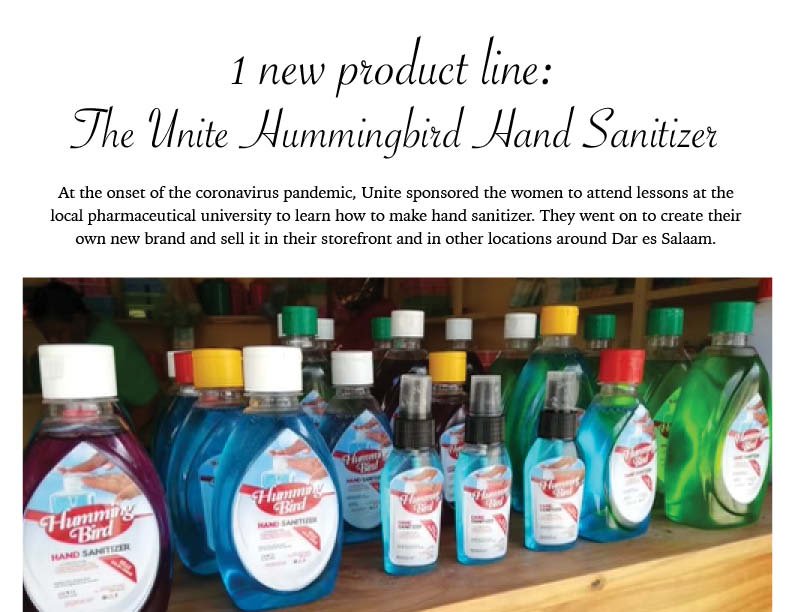
In Tanzania, widows are often stigmatized, marginalized and victimized making life for them and their children rife with hardship. Unite’s “Brave Widow” program is designed to empower 10 of these impoverished-yet-enterprising women with loans, grants, mentorship, community, education, and paid-work opportunities. Click HERE to hear one Brave Widow — Mama Mbweta — talk about how her experience with Unite as a member of the Brave Widow program has transformed her life. Mama Mbetwa received a grant from Unite to start a small restaurant in 2020, and in 2021 she was hired by Unite to cater each and every one of Unite’s many events, meetings, and celebrations. Here below please find a few more “Brave Widow Program” highlights from 2021:




Unite Food Program headquarters in Kunduchi Dar es Salaam. Click HERE to see a video of the construction process, start to finish.
2021 by the numbers, Part 2: The Unite Food Program
A year ago, we had an idea. With so many of our Unite Scholars going home to small-scale farming families in need of a secure, fair market for their crops (their only salable possession of value), we challenged ourselves to:
Build a food program through which we would buy organic staple food items from the small-scale farmers in need (at fair prices) to later sell back to the community at fair-market prices — thereby empowering not only the farmers but also the consumers by supplying organic affordable staple food items.
And then, we forged ahead… We wrote business plans and budgets… Traveled the country to meet with small-scale farmers… Built a comprehensive food processing plant on the new Unite Food Program campus… Engaged a first-class team… Constructed a UFP office… Purchased hundreds of thousands of kilograms of organic staple food items… Installed milling machines and all necessary safety, hygiene, and compliance items… Built gardens and storage facilities… Implemented initiatives to serve the surrounding community… Built an outpost in far western Tanzania (UFP outpost will follow in next post)… and so much more.
Today, one year later, the success of Unite Food Program (UFP) is overwhelming. The demand for UFP products is tremendous, and our “dream team” (below) is working around the clock to meet the relentless “asks” of the market and ensure UFP continues to grow and thrive. UFP’s future is so bright. Thank you to everyone who has supported this idea — you have helped make this dream a reality.
Meet the UFP “Dream Team”


Here below, a few “measurable” highlights from 2021:


Small-scale farmers represent 80% of all farmers in Tanzania.
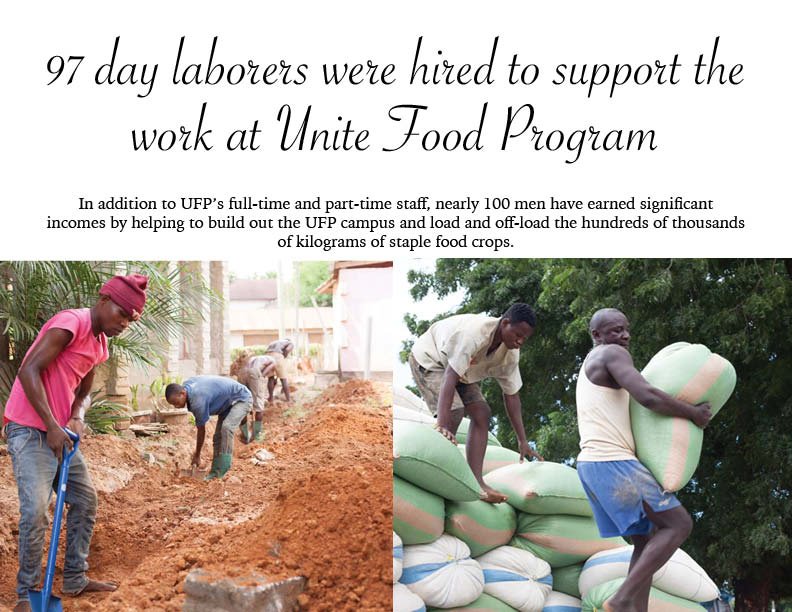
Click HERE to see a video of the maize off-loading process.



Click HERE to see a video of the water tank being delivered.


Happy New Year: 2021 by the numbers, Part 1
From our Unite family to yours, happy new year. 2021 was a hugely successful year for Unite, and we are deeply grateful to each and every person who helped support our work, in ways both big and small. Together all things are possible. Here please find the first in a series that will capture a few “measurable” highlights from 2021, program by program. We begin with:
The Unite Scholars Program
In 2021 our Unite Scholars achieved all kinds of successes — from graduations, celebrations, and internships to earning scholarships, university admissions, new learning opportunities, securing opportunities for paid work (part time for those still in school and full time for a few who have graduated) and much more. Here, a few highlights:


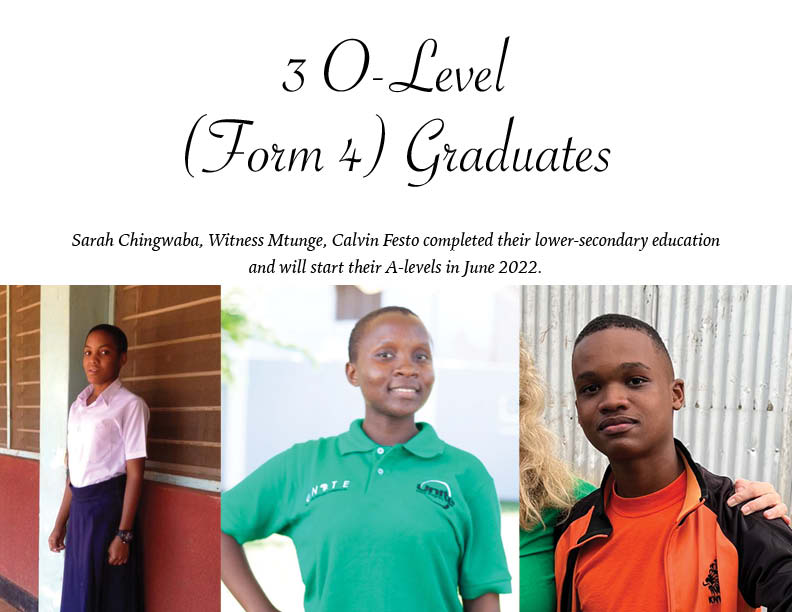


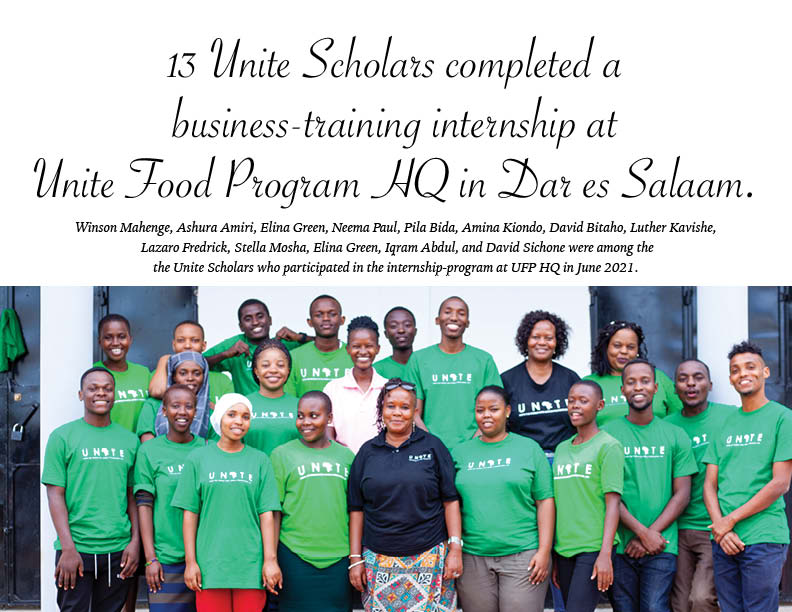


Thank you to all all our Unite Scholar Sponsors & Unite Donors for your support of these extraordinary young people. Their futures are bright, thanks to all of you… and to our awesome mentor Joan Mnzava who is tireless in her efforts to support, care for, nurture, discipline, guide & love each and every one of our scholars.

Unite Mentor Joan Mnzava with Unite Scholar Neema Paul at the graduation ceremony for the scholars’ internship at Unite Food Program headquarters in Dar es Salaam, June 2021.
We did it! Thank you to everyone who made Unite's $25,000 matching grant possible!
Dear friends and supporters of Unite,
Thank you so very much for enabling us to reach our goal of raising $25,000 to receive a $25,000 matching grant! With these funds we will expand and grow the Unite Food Program by empowering more:
Small-scale farmers with a fair market value for their organic grains and multi-layered, hermetically-sealed, pest-resistant grain bags that allow for the safe storage of freshly harvested crops without spoilage for over a year;
Children and families with healthy, organic, tasty, and affordable staple food items; and
Talented young men and women — as well as elderly widow women — with gainful work opportunities.
To watch our Unite Food Program documentary, click HERE.

Please click on the links below to watch a few 1-minute videos to see a bit about how Unite Food Program (UFP) is impacting lives in Tanzania and to meet UFP teammates who make this work possible. Please know that I am leaving next month to join our Unite team in Tanzania and will be accompanied by Program Director Anty Marche and Board Members Tanya Murphy, Lisa Lawrence, and Dr. Nikki Gorman. If you have any questions about our upcoming trip or are in Africa and would like to meet with us in person, please email me at anne@uniteafricafoundation.org.
Asante sana. Thank you so much.
VIDEO LINKS
Unite Food Program: Maize Stock Management


Click HERE to see how people around the world are feeding and “blessing” those in greatest need with the gift of Unite Food Program organic staple food products.

Stanley with Unite Program Director Anty Marche. Click HERE to hear Stanley talk about the importance of providing a secure market for the small-scale farmers.

Lazaro and Anty, Summer 2021. Click HERE to listen to Lazaro talk about why he loves working at UFP to “buy from the poor to feed the poor.”

Azamela working the land at Unite Food Program headquarters in Dar. Click HERE to hear Azamela, a food scientist, talk about how UFP is impacting society.

Richard “Richie” pictured with a certificate of excellence for completing the Unite Food Program intensive internship in June-July 2021. Click HERE to hear Richie talk about how UFP empowers him to work with all kinds of technology and freely express his creativity.

Hosiana teaches daily lessons to women in the community about health, hygiene, sanitation, and proper nutrition for themselves and their families. Click HERE to hear Hosiana discuss how she is educating the local community around UFP headquarters in important health matters.

Click HERE to learn about how UFP has built a secondary business selling the maize bi-product: grits.

A welcome sign made by a Unite Club student at Tabora Boys School in Tanzania.
A 7th Unite Club expands Unite's reach to 1,300+ students across Tanzania
A few months ago I shared with you all the exciting news that Unite Passion Project Founder & Director Lila Wells (also the Chief Operating Officer of BrewBike on the Northwestern University Campus) was awarded a grant of $3,800 from the BrewBike Future Fund (designed to empower young entrepreneurs tochase their dreams and do the good they are meant to do in the world) to launch an additional Unite Club in Tanzania. As a direct result of this grant, earlier this month, Unite teammates successfully launched a 7th club at Tabora Boys Secondary School, a highly respected government secondary school, celebrated in part for being the alma mater of the first president of the Republic of Tanzania Julius Nyerere. With this most recent addition, the Unite Passion Project, the Unite Hummingbird Tree Planting Campaign, and the Unite Soft-Skills of Professionalism curriculum is now reaching more than 1,300 students across the country.

(Left to right) Tabora Boys Teacher Miss Neema Mhoja, Unite Environmental Scientist Clara Wilson Ngowi, Tabora Boys Teacher & Unite Club Coordinator Esckin Sanga, Unite Club Vice Chief Henry, Unite Scholar & Club Chairperson David Bitaho, and Unite Scholars’ Mentor Joan Mnzava in front of Tabora Boys School.
Every Unite Club receives from Unite The World With Africa Foundation a laptop, a projector, a speaker and microphone, a jump drive with 100+ Passion Videos and the Unite Soft Skills of Development curriculum, notebooks and pens for every member, a cell phone and monthly phone bundle, tree seedlings from the Unite Hummingbird nursery, a monthly stipend for club support, and more.

Unite Scholar & Tabora Boys’ Unite Club Chairperson David Bitaho lights the kick-off celebration cake (made by Joan Mnzava).
David Bitaho joined our Unite Scholars & Mentorship Program in 2019 and is now in his final year of higher secondary at Tabora Boys School. David has been continuously campaigning for our Unite team to bring the Unite Club program to his school so that he can help lead and serve his fellow students. He was overjoyed when Lila told him about the BrewBike grant. David is studying physics, chemistry, and mathematics and dreams of a career in computer engineering. Outside the classroom, David loves singing and is a member of his church choir. Click HERE to listen to him lead his classmate in his very own Unite Song. David lives with his parents (both day laborers) and three siblings in Dar es Salaam.
“Having the Unite Club here at Tabora Boys Secondary School is like bringing light into darkness. The club will take us to places we have never been before. We Unite Club members will make a great impact on our school, on our society, and even on our country at large.”
-- David Bitaho
Click HERE to listen to David’s speech.
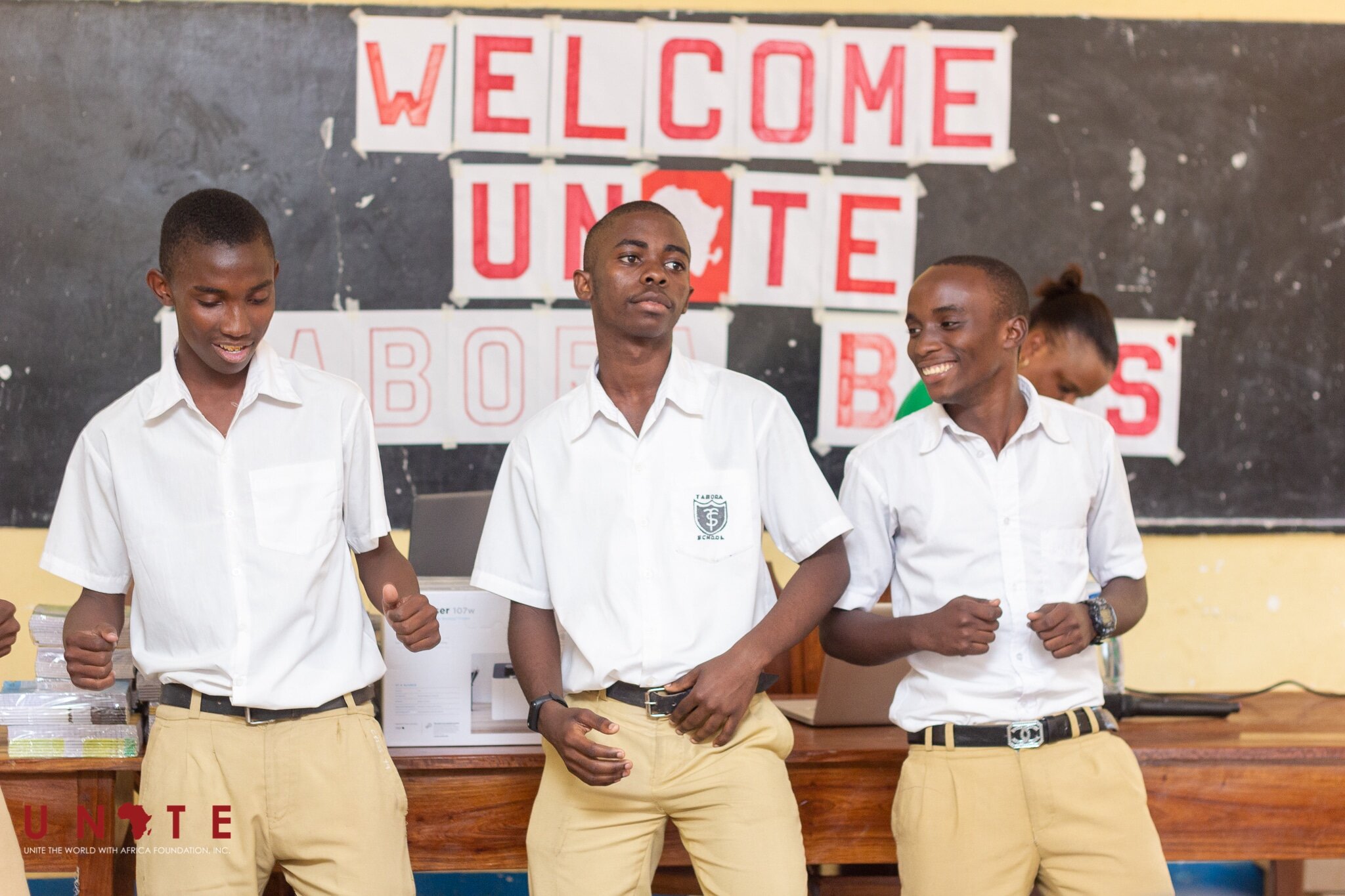

More than 170 boys signed up to join the Unite Club. More continue to join weekly. Click HERE to hear reflections by Tabora Unite Club member Bernald.
“I have already learned from Unite that passion, love, and unity are the strongest pillars for all people in the world.”
-Unite Club member Bernald

Unite Club watch a Unite Passion Project video made by Linda Wells. Click HERE to watch Linda’s Passion video. The Unite Passion Project exposes Unite Scholars and underserved youth across Tanzania to a wide array of career options, activities, and perspectives through a speaker series that showcases all kinds of ways that ideas and talents have been translated into meaningful, impactful, and rewarding careers.
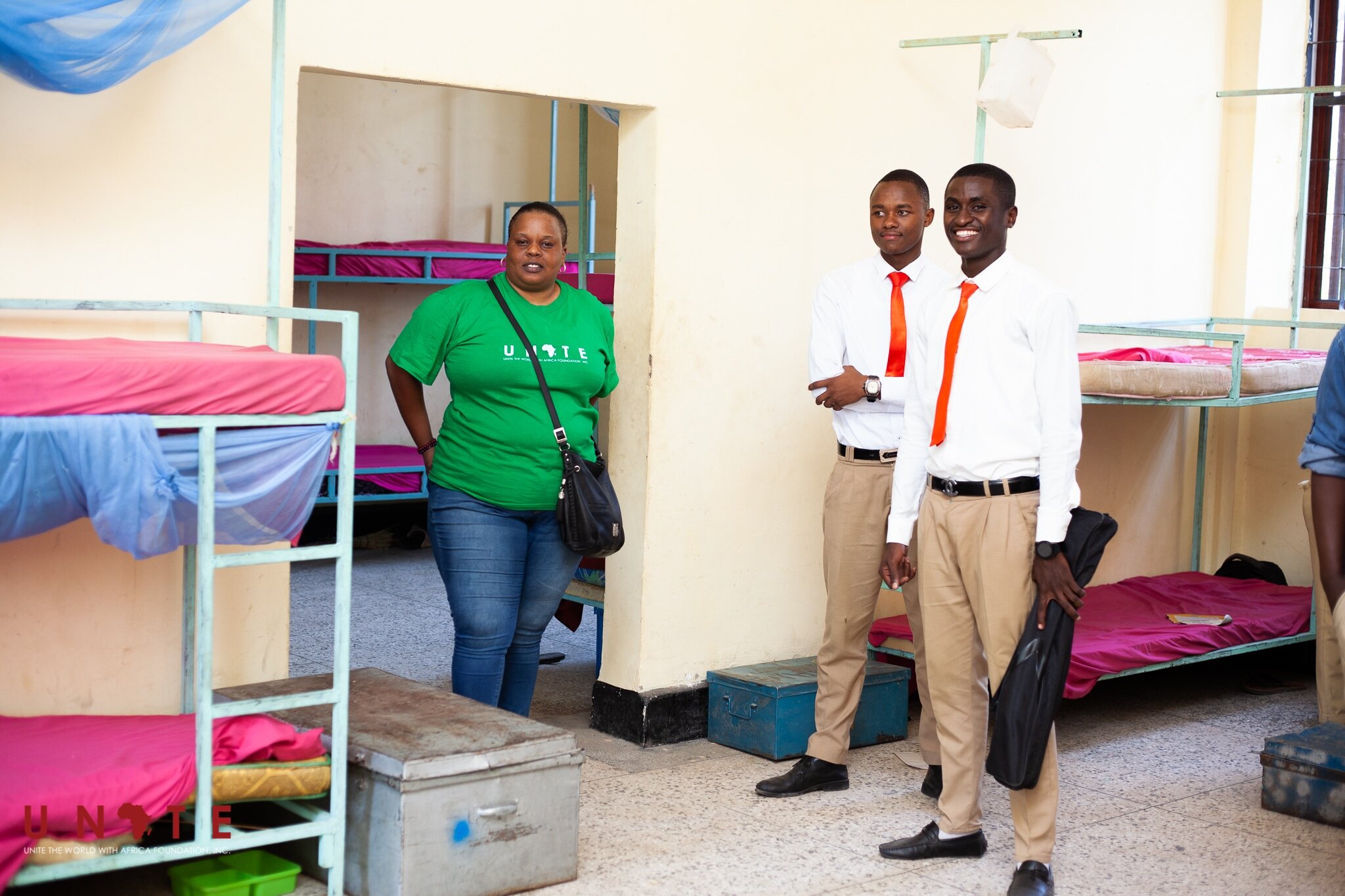
David and Henry give Joan a tour of the dorms.
“The Tabora students and teachers were thrilled to have us launch a Unite Club. During our kick-off event they danced and sang, watched the Passion videos of Linda Wells and Bob Whelan, watched the Unite Food Program documentary, ate cake, planted trees, performed in a talent contest… and fully enjoyed themselves.”
-Unite Mentor & Club Manager Joan Mnzava

As part of our Unite Hummingbird tree-planting campaign, the team planted 50 trees (orange, soursop, lemon, mango). Click HERE to watch a 1-minute video of the tree-planting at Tabora. The Unite Hummingbird Campaign’s mission is to combat the effects of deforestation and climate change through the planting of trees and the teaching of organic farming techniques.

Tabora Boys Unite Club Sign: Real Love Unites Us
A Matching Grant Enables Expansion and Sustainability for The Unite Food Program
Dear friends and supporters of Unite,
I hope and pray this finds you healthy and well. If you haven’t had a chance to watch our new Unite Food Program documentary, click HERE now. The short film was created by our team in Tanzania and America and explains the “why and how” of Unite’s rapid and exciting evolution. For those of you have followed since our inception — which is now more than 13 years ago — this film is a “must see.” And now,
with a $25,000 matching grant, we have the opportunity to expand the Unite Food program and make it self-sustaining.
While I tend to shy away from making bold and direct asks for financial support, I humbly invite your participation in raising these critical funds.

Since launching the Tanzanian-women-owned Unite Food Program (UFP) in early 2021, we have invested more than $100,000 to build-out of a fully-operational and compliant food processing plant (along with investments in working capital, offices, toilets, protective walls and security systems, water, power, and more) at the UFP headquarters in Dar es Salaam. We have purchased ~100,000 kgs of organic maize and rice from more than 50 small-scale farmers across Tanzania and engaged a full-time professional staff of 13 along with dozens of part-time workers (most of whom are widow women) who help procure, transport, clean, pack, sort, and sell food items. Currently the UFP organic food products are being sold at dozens of retail and wholesale outlets around and beyond Dar es Salaam in Tanzania.
***
The funds from this campaign will be used for the following directed investments:
40,000 additional Kgs of organic rice & maize. (Cost: $10,000)
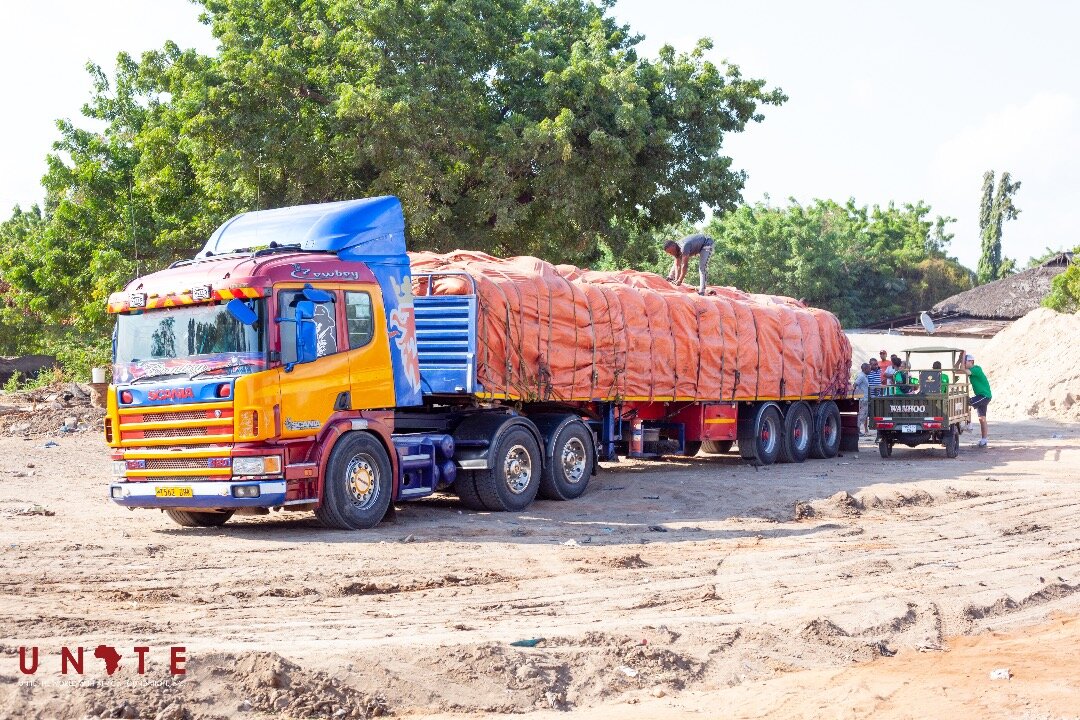
Maize being delivered in Dar es Salaam.
3,000 reusable Agro-Z® grain storage bags to keep the harvest safe and secure. (Cost: $5,000)
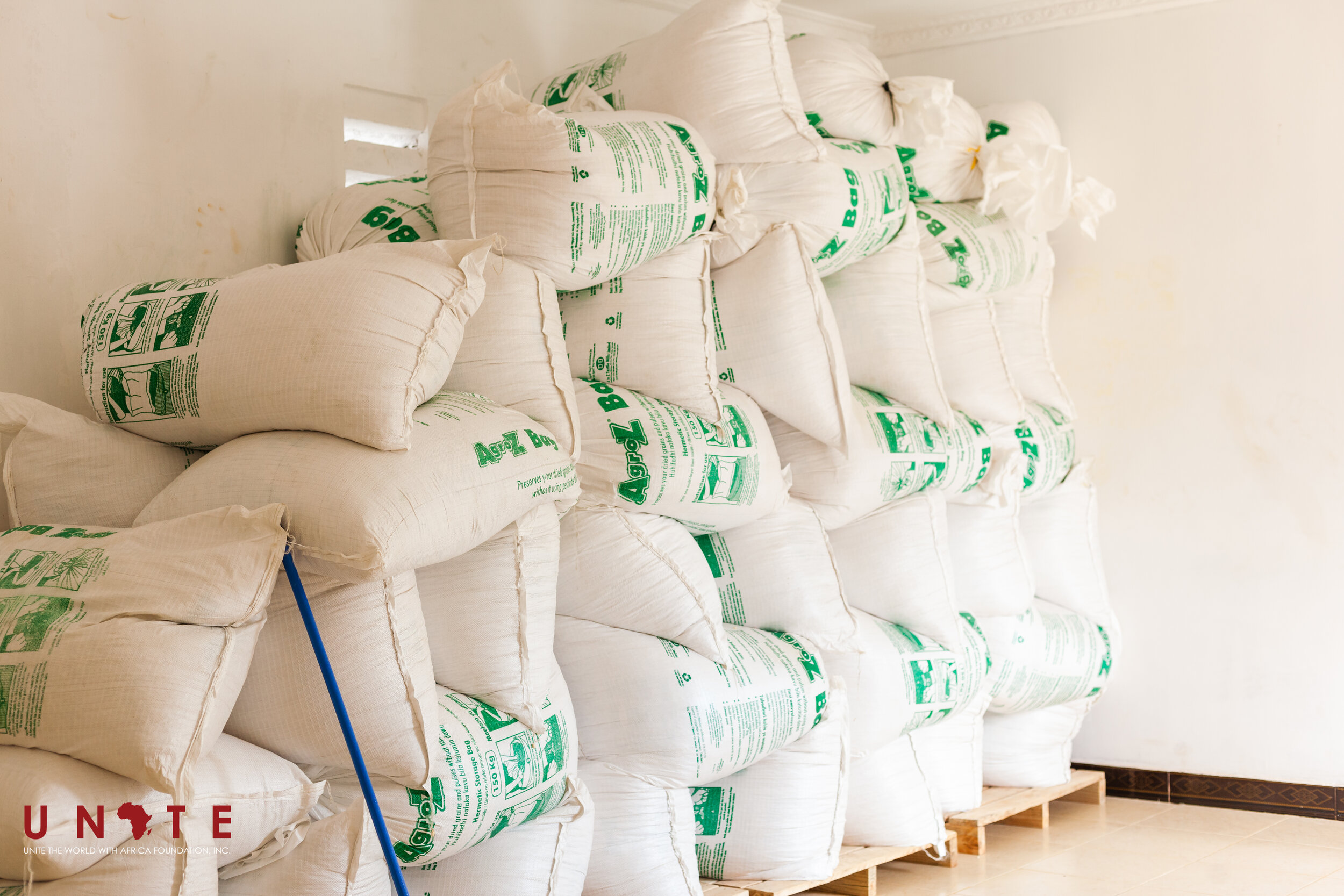
AgroZ® Bags are multi-layered, hermetically-sealed, storage bags that protect grains against insects and pests without the use of pesticide dusts.
A Bajaji “tuk tuk” to transport UFP staffers & UFP customers through the highly trafficked streets of Dar es Salaam. (Cost: $5,000)

A Bajaji can transport up to four people at a time.
A three-wheeler motorcycle-truck to transport products to retail and wholesale customers. (Cost: $5,000)

A three-wheeler motorcycle truck covered to protect cargo.
A generator to ensure that UFP can operate uninterrupted. (Cost: $15,000)

A 40-foot shipping container to provide secure inventory storage. (Cost: $10,000)

You are most welcome to Unite Food Program Headquarters in Dar es Salaam.


To arrange a visit or to inquire about an upcoming Unite tour, please email anne@uniteafricafoundation.org or call me direct at +1.314.239.3997 (USA).
Our Unite Food Program documentary is finally here!
Unite’s long awaited documentary introducing our new Unite Food Program is finally here! Please click HERE to watch our 10-minute film that explains the “why and how” of Unite’s evolution. A very special thanks to our Unite team around the world as well as to all of our supporters who help make this work possible. Together, all things are possible.

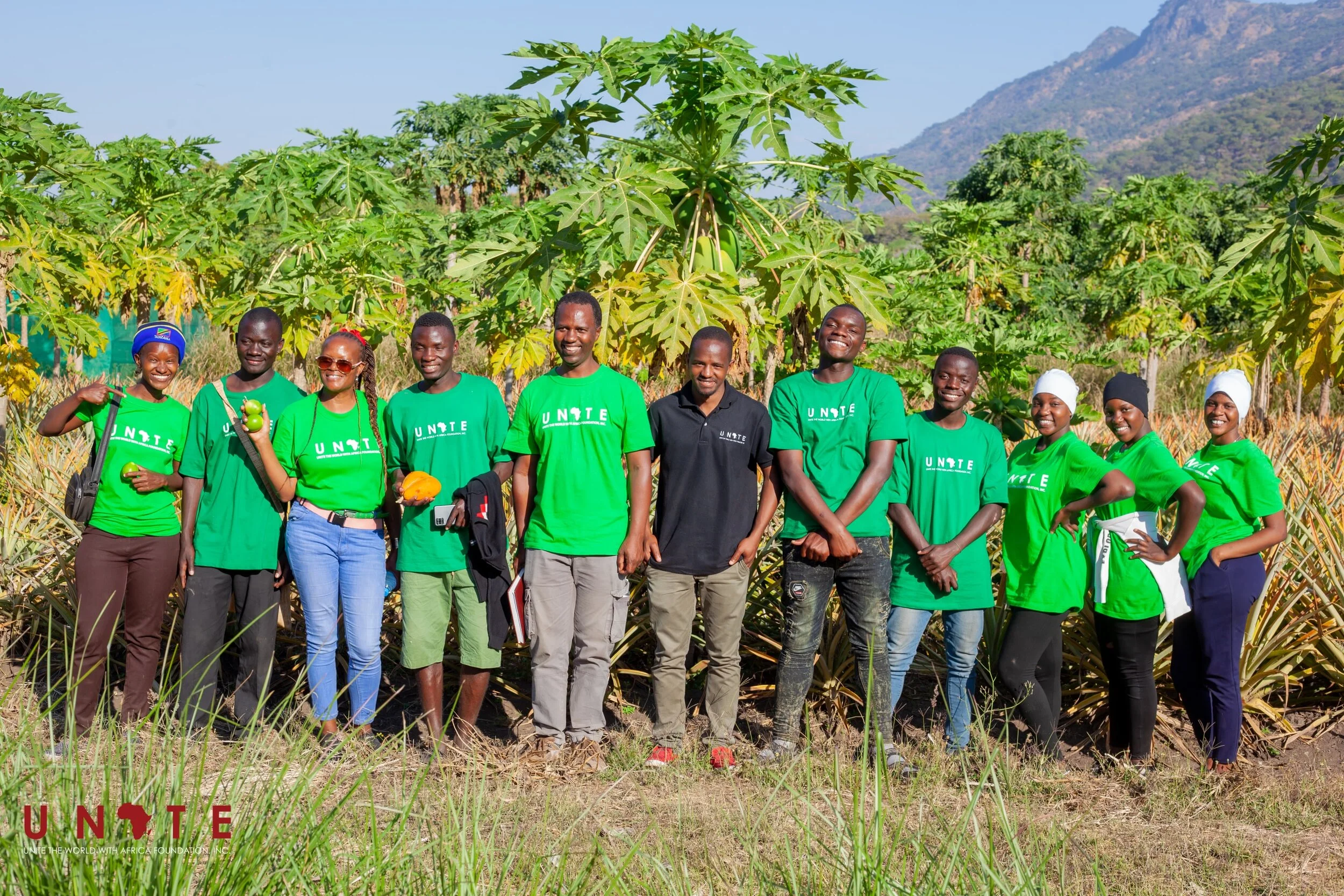
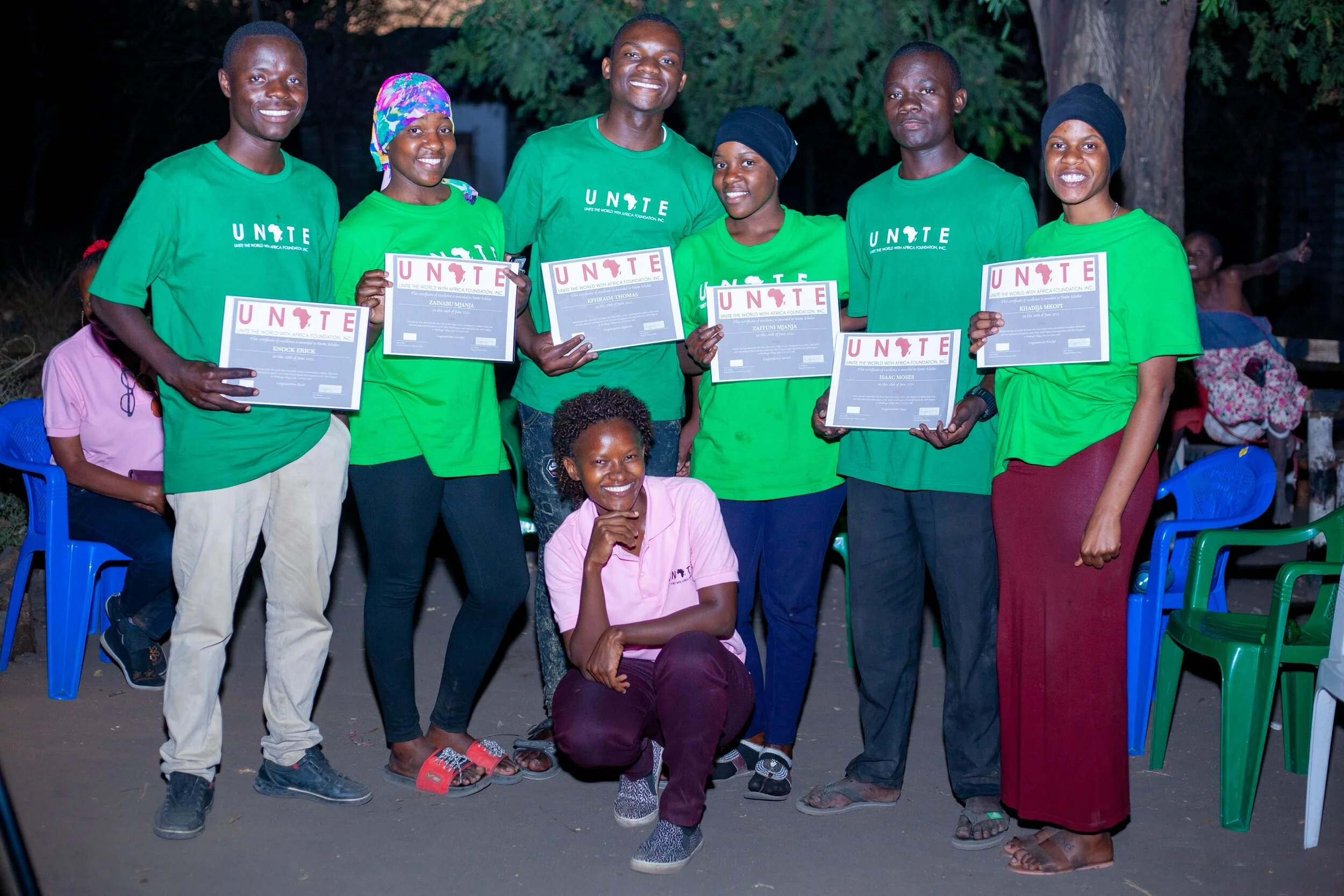
The team at Nankanga: (Left to right) Unite Environmental Scientist Clara Wilson Ngowi, Unite Scholar Isaac Moses Mwimanzi, Unite Program Director Anty Marche, UFP Outpost Director Baraka Sadam Saul, Unite Logistics Manager and Driver Gaudence Moshi, Unite Doctor Raymond Mgeni, Unite Scholar Ephraim Thomas, Unite Scholar Enock Sambala, Unite Scholars (twins) Zaituni and Zainabu Ally, and Unite Scholar Khadija Mkopi. Click HERE to see a one-minute video of the Unite Scholars and team’s first day at UFP Outpost Nankanga.
Unite Scholars complete an internship at Unite Food Program Outpost (Part
Earlier this summer, a number of our Unite Scholars completed an internship at our Unite Food Program (UFP) Outpost in the Nankanga Village in the Lake Rukwa District of southwestern Tanzania. In this extremely remote area, there are no paved roads and there is no running water or electricity. Nearly everyone survives as subsistence farmers or fishermen (on nearby Lake Rukwa). In these villages countless children are not able to attend school due to extreme poverty and their family’s inability to pay for such basic items as uniforms and school supplies. Many of them can be seen in the photos and video links in this article just hanging around the UFP Outpost, which provides the only maize and rice milling machines in more than five surrounding villages. During our Unite Scholars’ time in Nankanga, they assisted the UFP Outpost staff with milling rice and maize and providing customer care; they attended agro-business training lessons led by a local missionary-turned-large-scale-farmer; they planted banana trees on our new UFP land; they served the local community, cruised on Lake Rukwa, and much more. Below please find a few highlights from this extraordinary and historic week for our Unite Scholars and teammates.
”Thank you Unite for this unforgettable experience at Nankanga. I’ll forever be grateful.”
~Unite Scholar Zaituni Ally
FOOD PROCESSING AND CUSTOMER CARE

Click HERE to see a one-minute video of the Unite Scholars processing rice at the UFP Nankanga Outpost.
Throughout this most recent harvest season, our UFP Nankanga Outpost has been receiving between 80 and 140 customers each day. Women walk for miles, some with their rice and maize carried by donkeys and others hauling their crops on their backs, to have their harvests processed. To meet this demand, UFP Outpost manager Baraka Saul has hired four full-time employees to operate the machines. Our Scholars provided much needed extra hands during this very busy season.
TEAK TREE FARMING

Click HERE for a one-minute video of the team at Ted Rabenold’s training program.
Our scholars spent a day with Ted Rabenold (an American missionary who has lived in Tanzania for more than 30 years) at his “Shamba Darasa” Agricultural Training Center in the Lake Rukwa district learning about teak tree farming, fish farming, planting and tending to papaya, avocado, lemon, and lime trees, and more. Ted and his wife Kim regularly host skilled teachers at their working farm who come to train local small-scale farmers in both the theoretical and practical aspects of horticulture, orchard management, environmental awareness and preservation, erosion control, animal husbandry, fish farming, beekeeping, innovative and sustainable resource utilization, and more.
“Mr. Teddy taught us about symbiotic agriculture. He grows different types of trees for both wood and fruit. He rears animals like chickens and pigs for food and uses their dung as manure for his trees. The water he uses o irrigate his trees he reuses to keep his fish alive. These are all very interesting methods to learn.”
~Unite Scholar Isaac Moses Mwimanzi

Teak tree farming in Tanzania. Teak wood is harvested after 20 years and sells on the local and international markets for high prices.
PLANTING BANANA TREES ON UFP LAND
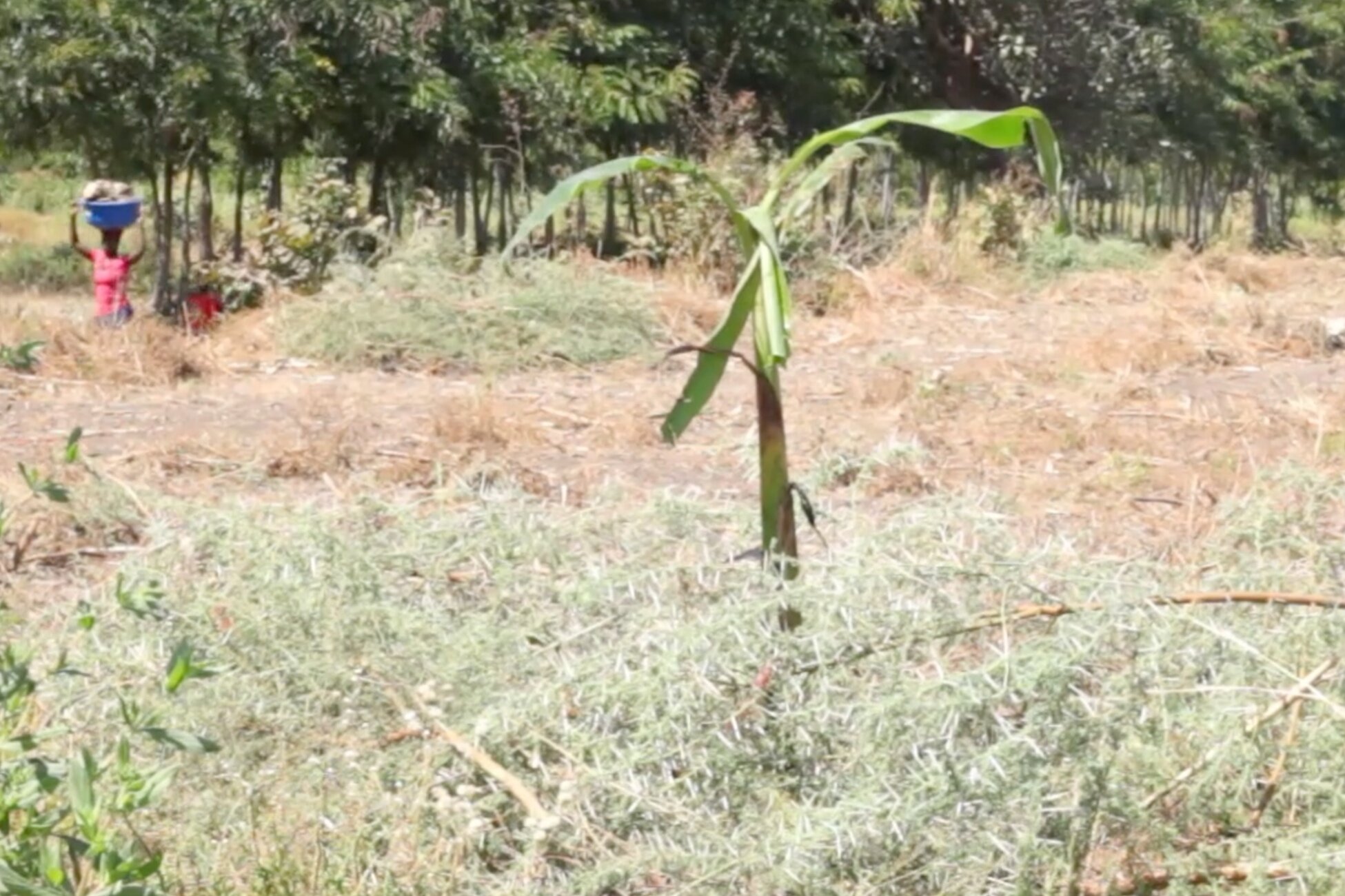
Click HERE for a one-minute video of the scholars preparing the land for the banana trees.
The team learned how to plant and protect young banana trees that they transported to Nankanga from the Iringa District of Tanzania. (The trees were a gift from the mother of Ephraim, one of our Unite Scholars, taken from her small banana shamba in Iringa.) Our scholars dug holes, prepared soil by adding charcoal and layers of manure and compost, planted the trees, covered the holes, and constructed natural thorn fences around each tree to provide protection from goats, cows, and local wildlife.

“For me, I have learned the an amazing lesson that ‘everything starts from zero’.”
~Unite Scholar Isaac Moses Mwimanzi (above left)
SERVING THE LOCAL COMMUNITY
In addition to working at the UFP Outpost and on the UFP land, our Unite Scholars and teammates spent time serving the local community. They visited the Nankanga Secondary School where the headmaster granted them permission to meet with the students (in separate groups of boys and girls) and discuss both personal and academic issues and challenges.
“The students all gave us their undivided attention and shared with us many challenges. We did our best to help them, teaching them such tips as time management, cooperation, self-determination, commitment, serious struggle, and hard work.”
~Unite Scholar Enock Sambala (pictured below leading a class at Nankanga School)

Click HERE for a one-minute video of our Scholars working with the kids at the local Nankanga secondary school.

“We learned that these are the lucky kids in Nankanga. Most kids do not get to go to school as their parents deem school a waste of time and believe that their children’s only role is to work in their respective domestic environments.”
~Unite Scholar Ephraim Thomas (back left in green t-shirt)

“We talked to the girls about the different challenges they face. We told them to persevere, to never give up on their educations, and to do everything they can to reach their goals.”
~Unite Scholar Khadija Mkopi (above right)

“The majority of girls in Nankanga don’t go to school. Those who do lack even the most basic knowledge about health and feminine hygiene. Teenage pregnancy is also a critical issue because a majority of the girls are married off at a very young ages, some as young as 14. That really broke my heart.”
~Unite Scholar Zaituni Ally

In their moments of free time, our Scholars and teammates took turns reading books (donated by Unite and transported to Nankanga to serve as a small community library housed at UFP Outpost) to the local children…

…danced to engage and entertain, and…

…and played games with the many children who spend their days just loitering around the UFP Outpost.
COUNSELING WITH UNITE DOCTOR RAYMOND MGENI
In addition to their time spent working and serving, our Unite Scholars were given time with our Unite Doctor Raymond Mgeni to ask questions and receive counseling. Each of our scholars face many unique and extreme stresses in their own personal lives and with their families. Unite works to provide them as much care and individualized support as possible.

Unite Scholars Enock and Isaac in a private meeting with Dr. Raymond Mgeni during which time they could ask any question and share any challenge in a confidential setting.
TAKING TIME TO CELEBRATE THEIR ACHIEVEMENTS!
At the end of the internship, each Unite Scholar received a Certificate of Achievement to honor and acknowledge his/her hard work and commitment, and the team was taken on a cruise on Lake Rukwa. For most, this was their first experience on a boat of any kind. What fun!


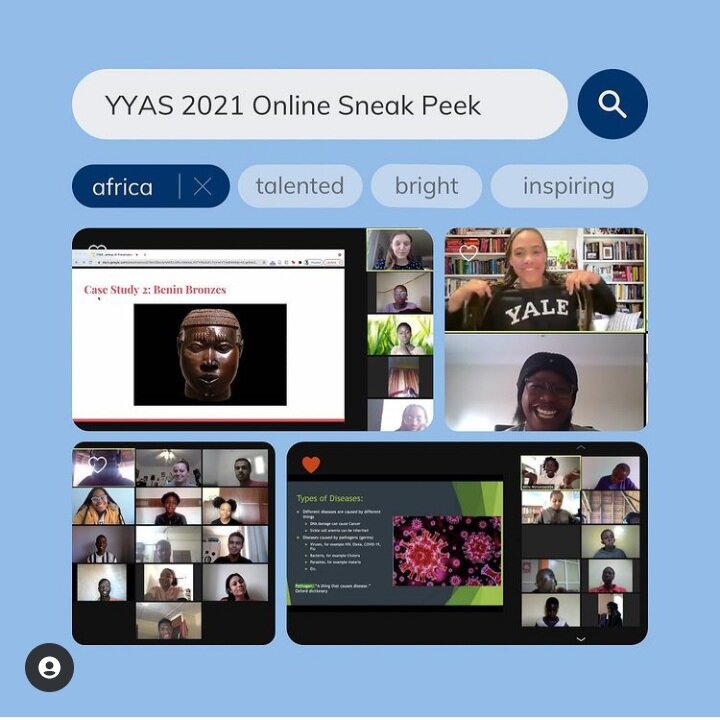
Unite Scholars join forces with Yale's Young African Leaders Program
In February 2021, Unite Program Director Anty Marche shared a link with all of our Unite Clubs across Tanzania for an application to the Yale African Young Leaders Summit (YYAS), an intensive academic enrichment program run by Yale University. The program took place virtually earlier this month in July 2021. Interested students were invited to use our Unite-sponsored laptops and internet access to submit applications. Many applied but just three were accepted — Zaituni Mjanja Ally, Zainabu Mjanja Ally, and Elina Green. These three, all of whom are fully sponsored fully by Unite as Kit Merriman Scholars, came from Masasi Girls Secondary School in southwest Tanzania. Our team in Tanzania coordinated with Masasi faculty to ensure the girls had time and space in their busy schedules to attend the week-long program. We provided them laptops as well as funds for internet access, food, lodging, transport, and more.
The YYAS program included lessons such as:
Discerning root causes of African poverty, understanding the continued spread of HIV/AIDS, and brainstorming pathways forward;
The importance of volunteerism and self awareness;
Climate change and global warming as well as what measures young leaders can take to influence positive change;
Leadership and the importance of strong listening and communication skills;
Career strategy and entrepreneurship;
Applying for university scholarships, financial aid, and navigating the application process. (The scholars heard presentations from admissions officers hailing from Rice University, University of Chicago, African Leadership University, and others.)
YYAS was a huge opportunity and success for our Unite Scholars. They each connected with a powerful network of young leaders from across the continent, and they have been paired with YYAS mentors who will advise them throughout the university application process upon their graduation from Form 6 (higher secondary) in June 2022.

Zaituni Ally, a Form VI student at Masasi Girls’ High School, participating in the Yale Young African Leaders Summit in July 2021.
“It was so exciting to be a part of this program, which involved so many students from all over Africa. I learned so many things, but perhaps I was most excited about the leadership lessons. I learned that a leader must be a role model. She must be smart and have good manners. She must be respectful of others, tolerant, and a good listener. Another important thing I enjoyed learning more about and discussing with my peers is the challenge of poaching, which is still taking place in most of our African countries. We discussed many different measures by which we can deal with the problem of wildlife poaching.”
~Zaituni Ally Mjanja, Masasi Girls’ High School, Form VI CBG

Elina Green, a Form VI student at Masasi Girls’ High School, participating in the Yale Young African Leaders Summit in July 2021.
“One of the most amazing things that I learned was from one of our instructors named Eddy. Eddy was raised in Kenya and later on got a scholarship to go to study in the US. In his story he told us that he has a file in which he keeps all the letters he has ever received in response to any kind of application he ever submitted to any program, internship, university, and job. Most of the letters are rejection letters. When we asked why he did this, he said that it motivates him and reminds him that failure is not the opposite of success but part of success.”
~Unite Scholar Elina Green
Click HERE to see a video of Elina Green in the Yale Young African Leaders Program.

Zainabu Ally, a Form VI student at Masasi Girls’ High School, participating in the Yale Young African Leaders Summit in July 2021.
“The week-long program was so amazing. I particularly enjoyed meeting, learning from, and being able to ask questions to so many alumni from different universities around the world. I learned so many things that I will share with all the Unite Scholars — specifically all about the process of applying for admissions, scholarships, and financial aid at international universities.”
~Unite Scholar Zainabu Ally
CONGRATULATIONS ZAITUNI, ELINA & ZAINABU! WE ARE SO PROUD OF YOU GIRLS!
What's it like to volunteer with Unite?
If you’ve ever wondered what it’s like to volunteer with Unite, this is a story for you.
“This experience was a 10/10!
I literally could not have asked for a better trip!”
~Drew’s text to his family on his last day in Tanzania.
MEET DREW WARREN
Drew Warren, 22, traveled to Tanzania this summer for a three-week-long volunteer posting at Unite Food Program (UFP) headquarters in Dar es Salaam. His focus with UFP was working with Ibra Kawa, Unite’s photographer and videographer, and Richard Munisi, Unite’s animator, to create a short film about Unite Food Program to help Unite grow our USA-based donor base and secure a larger market across East Africa. Drew brings to Unite a unique perspective having worked an intern with the renowned STX Entertainment Film Studio in Los Angeles where he worked on trailers and films.

Drew (above left) with his fellow Unite filmmakers Richie Munisi and Ibra Kawa at Unite Food Program Headquarters in Dar es Salaam in July 2021.
“The Unite team is composed of some of the most incredible people I have ever come across. Unite has inspired me in so many ways, and I hold this experience close to my heart. My time with Unite is far from over, and I hope to remain closely involved with the Unite Food Program and the organization as a whole. Unite is creating meaningful change in Tanzania, and I am proud of the work that the team has completed. Thank you all for the unconditional support. Thank you specifically to my parents for opening my eyes to how other people live their lives.”
~Drew Warren
”Drew is highly adaptable, encouraging, and supportive. He is knowledgeable, articulate, leads by example, and has great insights about videography. I trusted him and looked forward to his guidance and advice.”
~Unite Photographer and Videographer Ibra Kawa

Click HERE to see a clip of UFP Environmental Scientist Clara Wilson Ngowi welcoming Drew and introducing him to the team.
Drew at work
During his three weeks with Unite in Tanzania, in addition to his movie-making escapades with Ibra and Richie, Drew helped with the production and processing of our UFP organic maize flour. He learned to work the mill machine, carried and arranged 100-kilo bags, transported the products to retail and wholesale locations, participated in direct sales of UFP products, and much more.
Click HERE to see a video clip of Drew and UFP teammates overseeing
the delivery and unloading of a shipment of organic maize from the Lake Rukwa district.
Click HERE to see a clip of Drew hauling maize.
Click HERE to see a video clip of Drew operating the UFP maize mill.
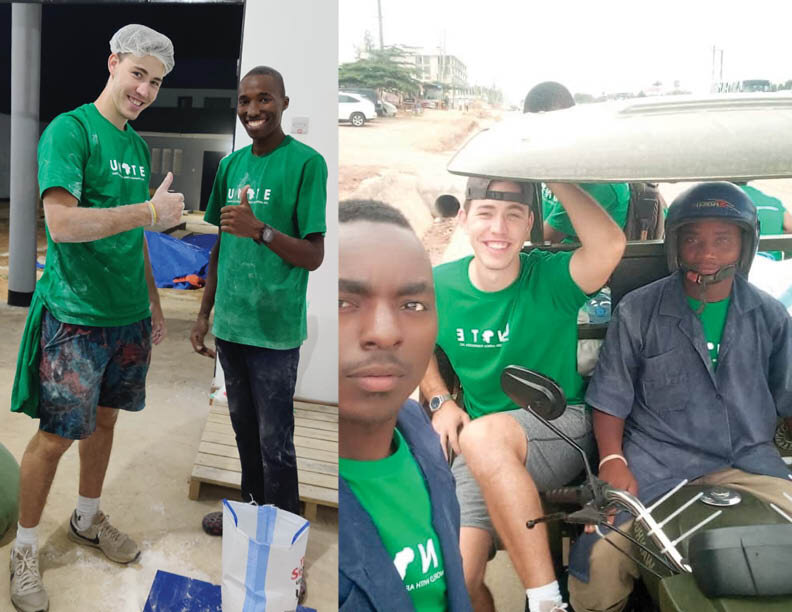
(Left) Drew with Unite Food Program teammate Stanley Arthur arranging bags of organic maize flour. (Right) Drew with UFP teammates Lazaro Mahulo and Salvius Nchimbi driving our three-wheeler to deliver UFP organic food products to buyers across Dar es Salaam.
Drew’s Blessings
In keeping with Unite’s mission to serve and care for those in need, Drew was able to “bless” a woman the team encountered while she was struggling to walk alongside the road with UFP organic grains. Drew also blessed Unite teammate Richie, who was next in line for our Unite garden banana harvest. Giving is SO good!

Click HERE to see a video clip of Drew blessing a handicapped woman with organize maize and beans from Unite Food Program.
Drew at play
At Unite we work hard — very hard — and then we take time to relax, connect, enjoy, and celebrate our achievements.
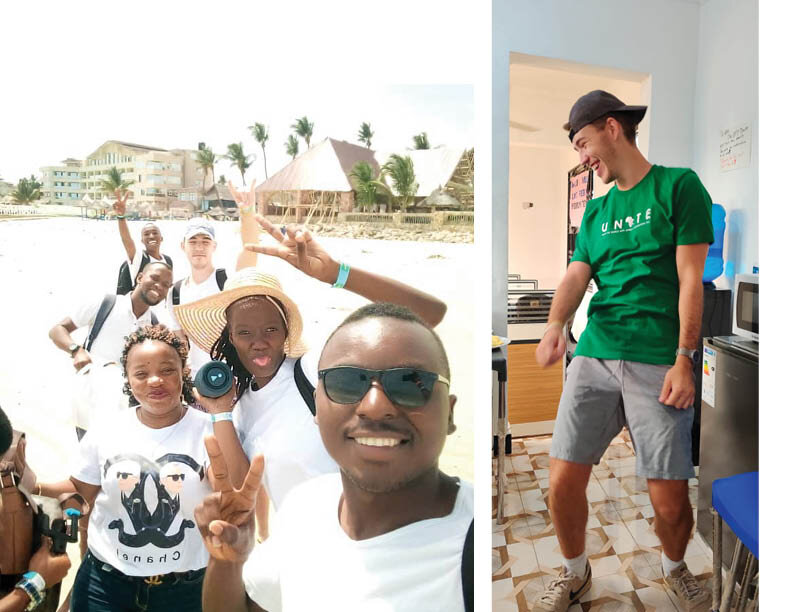
(Left) Drew with Unite teammates Lazaro, Azamela, Rhoda, Richie, Stanley, and Ibra (out of frame) visiting Budya Island for fun and adventures. (Right) Drew showing the team his moves during one of his many Unite dance parties.
Some thoughts about Drew

“I was just blown away by Drew’s character and how he got along with everyone. His personality, respect, work ethic, empathy, generous heart, and love for others made everyone just adore him. He is a fine young man, and the entire Unite team in Tanzania is looking forward to seeing him back again hopefully one day soon.”
~Anty Marche, Unite Program Director
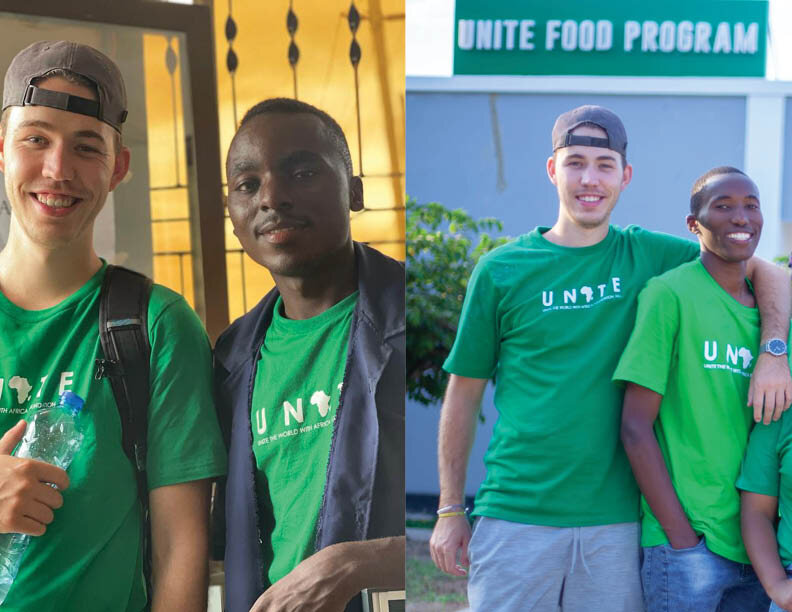
“Drew Warren is a hard working, fast learner who is flexible and able to cope with a challenging environment. He works well in a team and has excellent communication skills. He is a good and caring person.”
~UFP teammate, Lazaro Mahulo (above left)
“Having Drew in the team makes a huge difference. He always finds a way to get it done and brings to the team lots of encouragement and fantastic ideas.”
~UFP teammate, Stanley Arthur (above right)
Reflections from Drew’s parents: Andy & Tracy Warren
“Drew is a lucky human being. He’s had so many blessings in his life, and we think his experience in Africa is among the most wonderful. We have been so proud to view pictures of Drew with a true and effervescent smile on his face. The glean he gets from helping others is unmistakable. Drew’s Unite experience will forever broaden his view on humanity and our vastly diverse world. He truly adores the Tanzanian people and the joy they find in everyday life. The mission of Unite will be in his heart always.
Drew has experienced first-hand the tremendous difference that Unite is making in the lives of Tanzanian people. Unite’s mission is held in the highest regard for all those involved. Along with their hard work, there is a genuine joy and pride in what is being accomplished.”
To learn more about volunteering with Unite,
email anne@uniteafricafoundation.org.
Note:
All volunteer candidates must go through a careful review and evaluation process to determine eligibility for placement with our Unite team in Tanzania.
We match talent to need.
An awesome work ethic, an open heart, and a mind eager to learn are the most important qualities we seek in Unite volunteers.
THANK YOU DREW! WE LOVE AND APPRECIATE YOU!
Unite Scholars complete internship with Unite Food Program (Part 1)
Last month, over their school holiday, a number of Unite Scholars participated in internship programs at the newly constructed Unite Food Program (UFP) Headquarters in Dar es Salaam and at our Unite Food Program outpost in Nankanga village in southwest Tanzania. They learned about agro-business, customer service, teamwork, organic food processing and gardening, and so much more. This post features highlights from the scholars’ internship at HQ. The next post, Part II, will cover their experiences in Nankanga at the outpost.
“In order to save the society, we need to find problems and create solution. Unite Food program is the perfect example: buying grains from the poor to feed the poor.”
— Unite Scholar Ashura Amiry
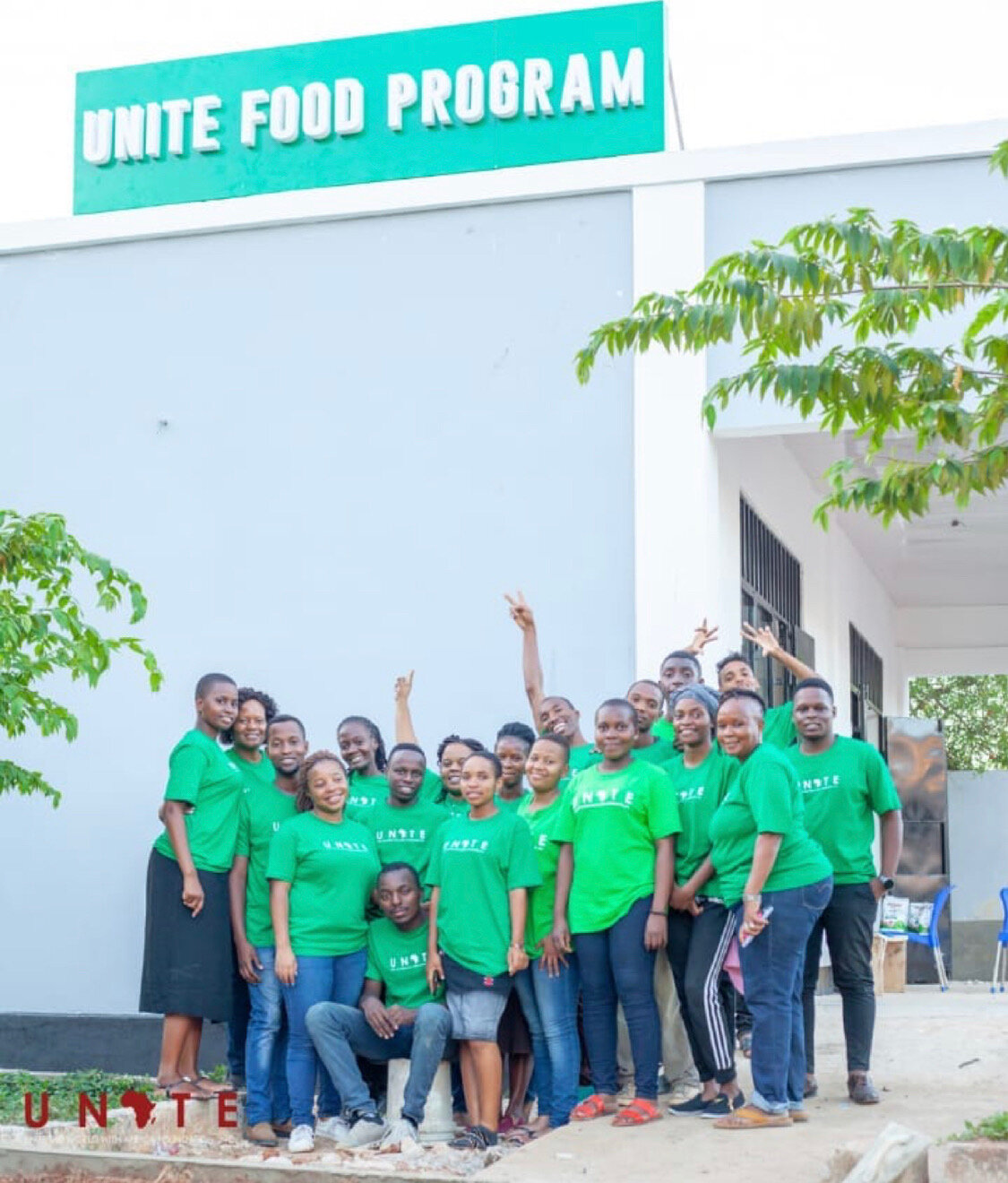
A number of Unite Scholars who completed Form 5 and a few who graduated Form 6 (A-levels, higher secondary school) spent two weeks at UFP headquarters in Dar this June working alongside UFP teammates. “I learned so much about achieving my dreams and that, no matter what, I always need to keep on dreaming. Without dreaming we become like birds without wings who will never be able to fly.” —Unite Scholar David Bitaho, rising Form 6 student at Tabora Boys Secondary School.

The internship at UPF HQ began with the receiving, unloading, and processing of more than 33,500 kilograms of organic maize purchased from small-scale farmers in the Iringa district. (To date more than 70,000 kilograms of organic maize have been purchased from small-scale farmers across Tanzania and delivered to UFP HQ).
Click HERE to see a one-minute video of the unloading process.

First, the maize is unloaded from the transport packages and laid out to dry in the sun to remove any last bits of moisture that could eventually lead to rot.
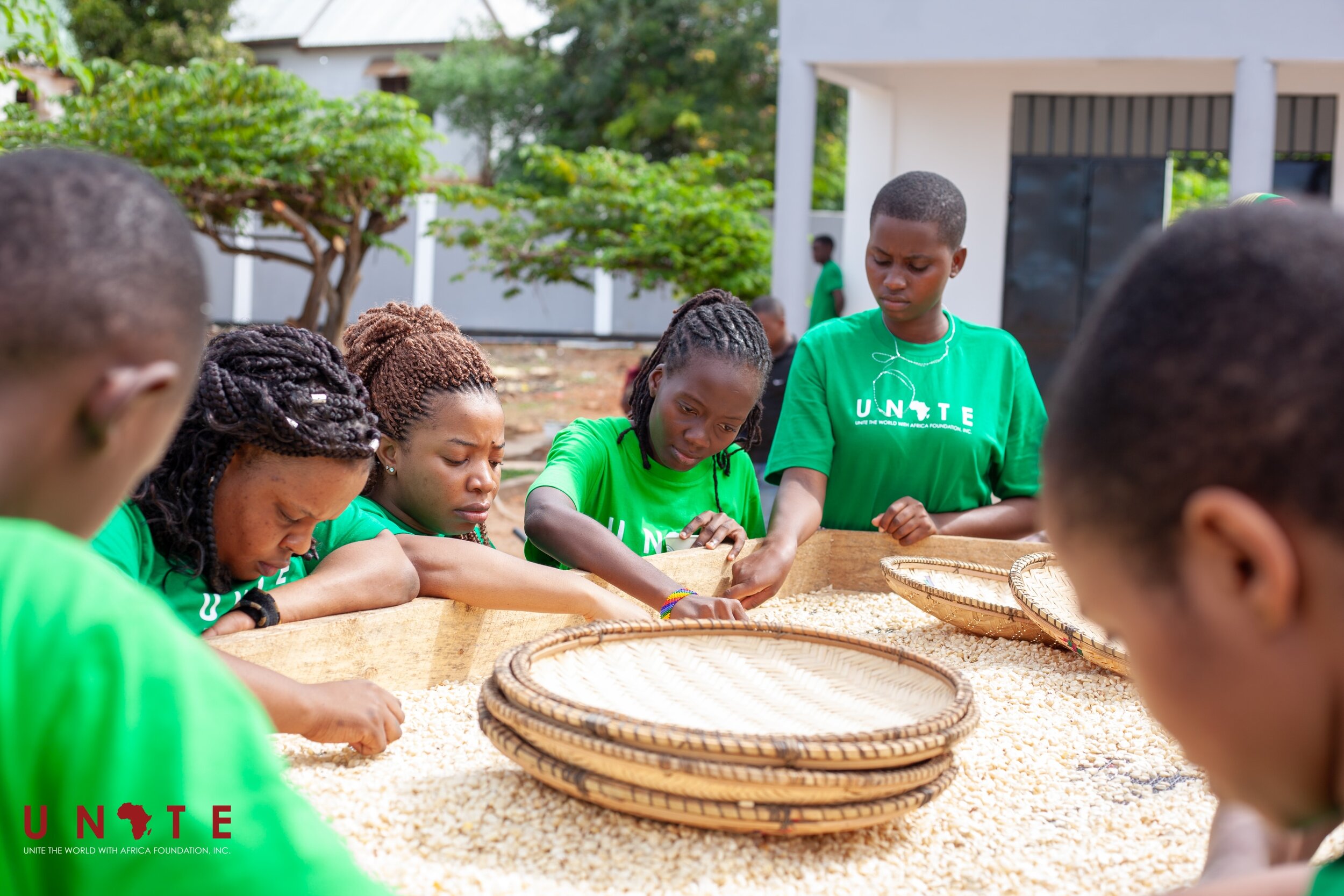
Next the maize is “winnowed,” which means that any unwanted dirt and/or debris is carefully and painstakingly removed by hand so that the final maize that is loaded into the air-tight Agro-Z storage bags is pure and clean.

Once packed in the hermetically-sealed, multi-layered, pest-resistant Agro-Z bags, the maize is arranged in the storeroom where it will remain safe and fresh for up to five years.
Click HERE to watch a one-minute video of the team sorting and cleaning the maize and preparing and packing the Agro-Z bags.
In addition to sorting and packing the maize, our scholars worked alongside our UFP team to “beautify” the UFP campus. They prepared the land for fodder grasses, spent time weeding and harvesting the on-site Unite garden, and even crafted and painted personalized clay pots in which they planted decorative flowers to line the gates and the interior walkways.
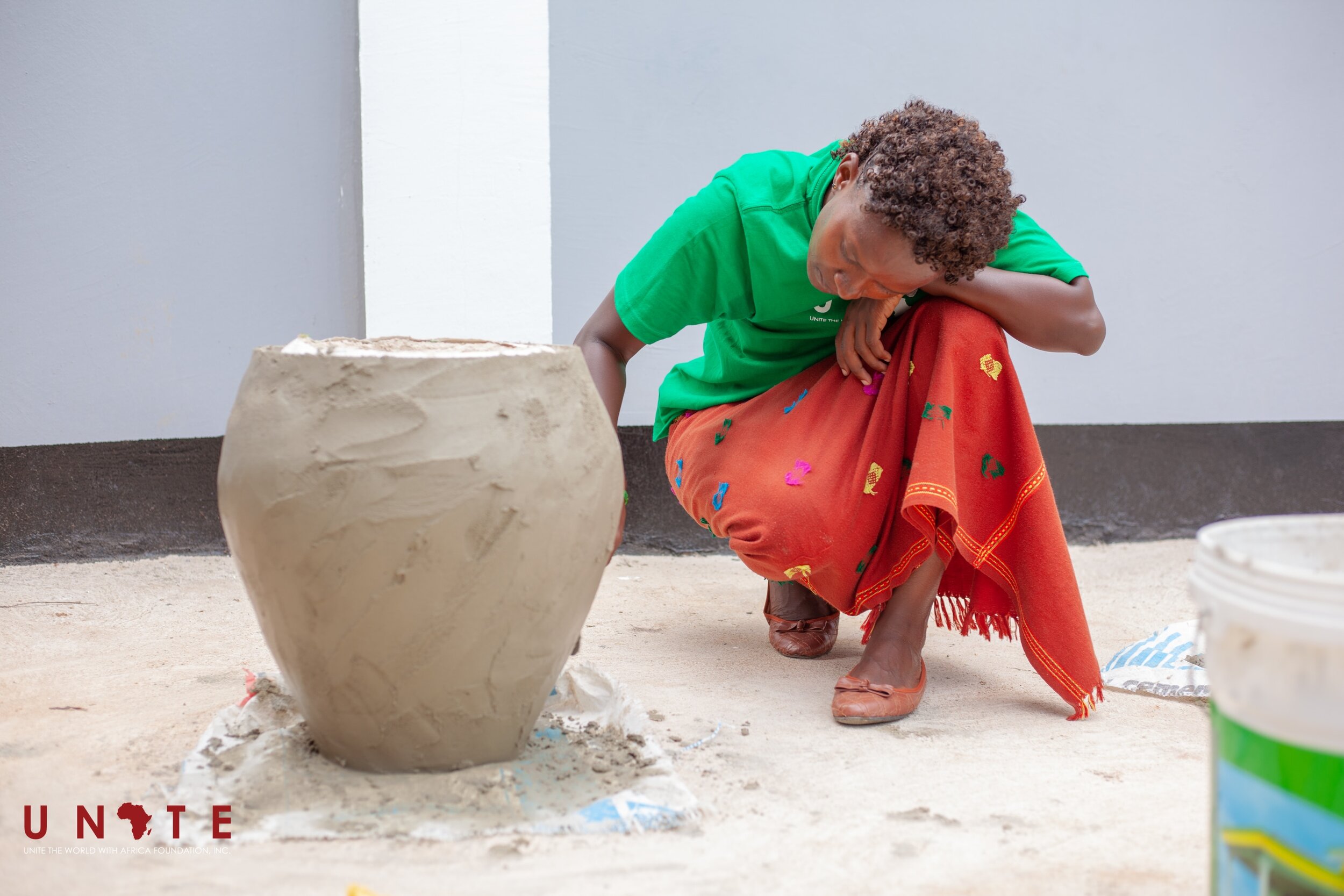
UFP co-director and environmental scientist Clara Wilson Ngowi demonstrates to the team how to make clay pots, which will be used to decorate and enhance the HQ campus. Each scholar was able to make, paint, and personalize his/her own pot — leaving a personalized “stamp” on UFP HQ.

The team received truckloads of topsoil, which they used to level and prepare the campus grounds for the planting of the fodder grasses.

Unite Scholar Ashura Amiry, Unite Program Director Anty Marche, and Clara Wilson Ngowi demonstrate to the team how to separate and plant the fodder grasses.
Click HERE to watch a one-minute video of the team planting the fodder grasses.
In addition to their hands-on labor at HQ, the scholars and team received two days of business training led by UFP advisor Romanus Mtunge (Tanzania Program Director for CUSO International) and local accountant and bookkeeper Mr Leo.

UFP Advisor Romanus Mtunge stressed to the scholars the importance of creativity, persistence, self discipline, commitment, staying true to one’s word, careful budgeting, risk taking, and the ability to learn from mistakes.

Professional accountant Mr. Leo led the team on lessons in bookkeeping and budgeting.
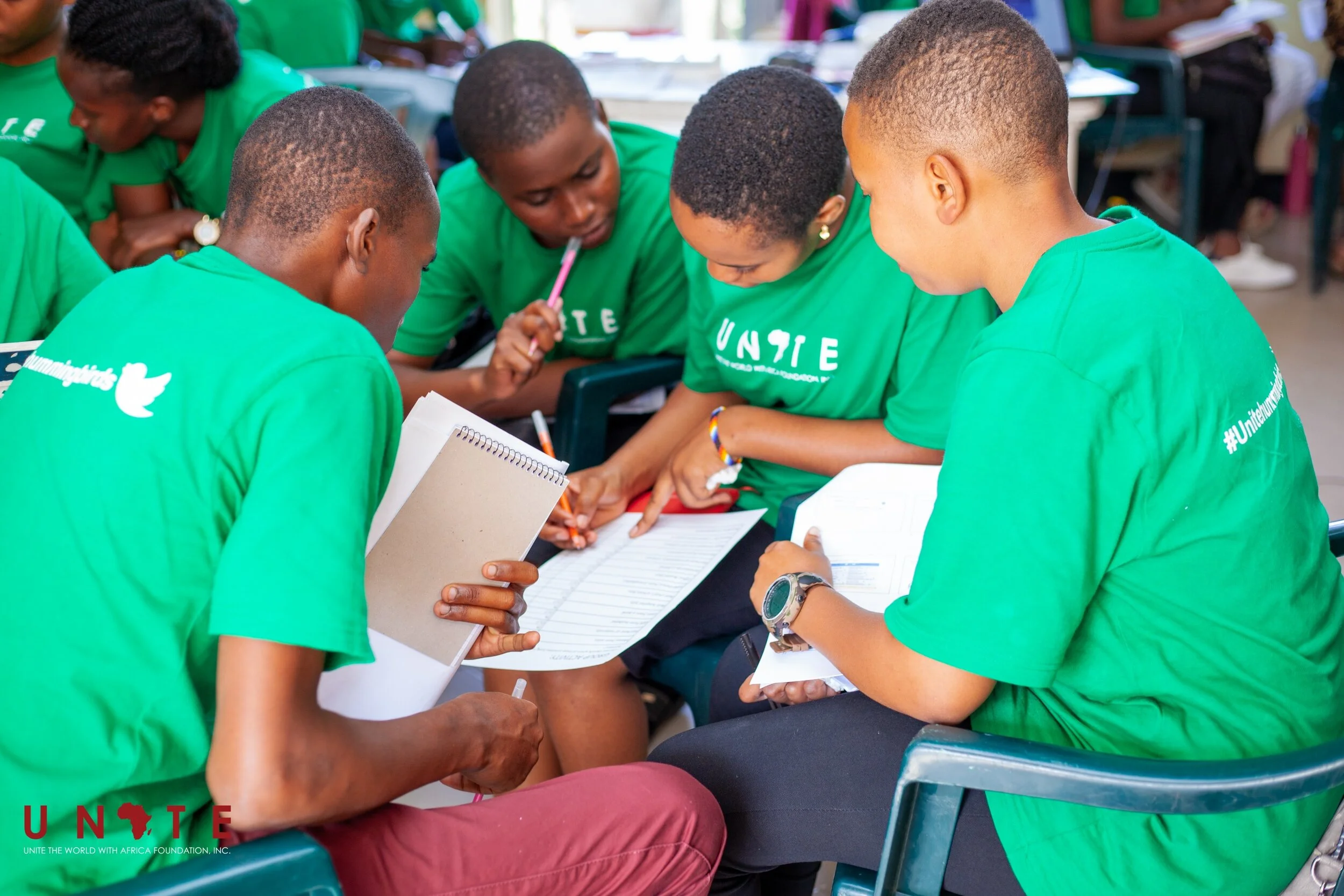
Additional topics covered during the two-days of training included sales and marketing; staffing and logistics; customer service; compliance and tax laws; leadership; and more.

“Mr Romanus talked to us about how to be a successful entrepreneur. He highlighted three basic things: Being practical with your money; realizing that building a business is a huge commitment; and being precise and honest with your word.” - Unite Scholar Luther Kavishe
Following their in-class business trainings, our scholars were placed in small working groups with UFP teammates and sent out into the field to conduct market research. Each teammate was tasked with interviewing shopkeepers and restaurant owners to complete at least 10 questionnaires that addressed such topics as which types of flour the customers were currently using, what price they were paying for their flour, what they liked and disliked about their products, what they are needing and wanting, and what would motivate them to buy from UFP.

The team at UFP HQ. June 2021

On the final day of the internship, the team welcomed special visitors Dr. Treasure Shields Redmond (co-founder of Fannie Lou Hamer House, a retreat space for black artists in America) and Lawrence Mwantimwa (founder & CEO of Africa Young Leaders Connect, a Tanzanian NGO that provides youth with leadership empowerment solutions). Dr. Redmond and Mr. Mwantimwa shared stories with our Unite Scholars about their personal career paths, some of the challenges and successes they faced along the way, and about the importance of hard work, focused vision, collaboration, and serving one’s society at large.

And then, it came time to celebrate! Unite’s lead mentor Joan Mnzava (top left) presented each scholar with a personalized certificates and gifts of organic honey.

Following the awards ceremony the team danced, sang, and ate cake!

Click HERE to see a video clip of the final organic maize flour product prepared for delivery.
Unite Passion Project WINS the Brewbike Future Fund Award
Founder and director of the Unite Passion Project Lila Wells (currently a rising junior at Northwestern University in Chicago) has been working part-time with the cold brew coffee company BrewBike since January 2020, first in campus operations and then in marketing and now with social media. BrewBike’s mission is “to empower the next generation of leaders through entrepreneurial experience.” Lila submitted her presentation (below) to the Brewbike Future Fund team of judges early this spring and was recently chosen as the winner of this student competition, which is designed to empower “the next generation of entrepreneurs to chase their dreams and do the good they are meant to do in this world.” The grand prize of $3,800 will be allocated towards growing The Passion Project through the launching of additional Unite Clubs in secondary schools across Tanzania. Congratulations Lila and thank you to the BrewBike Future Fund!
The AWARD-WINNING presentation

Hello and thank you for taking the time to listen to me talk about one of my passion projects today. Fittingly, its name is the Unite Passion Project – and venture has been a highlight of both my sophomore year and college career more broadly.

My name’s Lila. I’m a sophomore undergraduate at Northwestern University double-majoring in Sociology and Legal Studies. And that, I’m passionate about. But it took me a while to get there. First quarter freshman year, I was an aspiring Chemistry major who thought that the lab was my future. That, I believed, was my passion. Until I took my first college Chemistry Course and realized that my interests and talents most definitely lied elsewhere. This realization was something I thought had more to do with me than my access to career knowledge more broadly. It seemed like all of my peers around me knew what they wanted, what their futures would be. But as I began to converse with people I admired, I found that – as young people – choosing a course of study and future career path is something inherently mutable and subject to change. Frankly, it’s something we as 17, 18, 19, and 20 year olds often don’t talk enough about. Aren’t perhaps prepared enough for.

I’ve had the honor and pleasure of working with the international NGO Unite the World With Africa Foundation – which aims to empower extraordinary yet impoverished and marginalized Tanzanian youth and women with quality education, health, leadership, and business development programs – all aimed to foster independence and long-term success. I’mlucky to have been mentored by Unite’s incredible Tanzanian leadership team, and to call members of the organization’s flagship program – the Unite Scholars – my good friends. And as I was talking with one of them, Imani Faustine, this past June he brought up a question that brought me back to my freshman year dilemma. He asked the following – can you have more than one dream? The answer is, of course, yes, but its something that – especially in Tanzania – students often aren’t encouraged to do. Their school system, operating similarly to the British system, steadily hones in on one to three subjects throughout a student’s pre-university path. Once you’ve reached your A-Levels, your course is practically set. Or so we think, right?

Imani’s question and my dilemma, as well as ideas brought up by the remaining 41 Unite A-Level Scholars are ultimately what created this venture, the Unite Passion Project. The Unite Passion Project operates where other programs don’t: government A-Level schools in Tanzania. Through a comprehensive curriculum emphasizing soft skills as well as an open source library speaker videos, this program addresses challenges that are otherwise not discussed—career readiness and professional development. These skills are vital for students coming of age in a time where the traditional path (school, one career, retirement) is becoming less and less common. The Passion Project addresses an endemic lack of career exposure by showcasing the passions, career paths, and activities of students and professionals from around the world, as well as how they have leveraged their resources and strategies to attain their dreams. We focus on amplifying Tanzanian excellence, and currently have 107 speaker videos on the platform, reaching over 1,300 students in six Tanzanian upper secondary schools.

The Passion Project videos are viewed and discussed in depth in Unite Clubs within each school. The clubs have a tripartite focus, ecology, altruism, and intellect. The first, ecology, stresses environmental reforestation – and sidenote, our Kibaha Club planted over 400 trees this spring. The altruism tenet is all about giving back to each school’s surrounding communities, often through donating time to local projects. The last tenet, intellect, is where the Unite Passion Project videos – to encourage honest, strategic and thoughtful debate about the future.

Starting last summer, I began to build a Tanzanian and American team through my contacts at Unite as well as through my university to embark on this project. I have spoken about this venture on Work With Engaisi, a Kenyan podcast, as well as at Emory University. This project has also been featured in the Greens Farms Academy magazine, Westport News, the Audira Labs newsletter, and BBC’s Voice of America Swahili.

So, where are we now? The Unite Passion Project currently has 107 speaker videos on its platform (both on YouTube and offline through Tanzanian-mediated channels). Our six partner Unite Clubs have over 1,300 members in total, and we have added over 12 comprehensive modules emphasizing soft skill and pre professional development. This spring, I have built a team of five undergraduate students from Northwestern, DePaul University, and Brown, and together we reached out to over 200 potential speakers – garnering over 40 thus far to add to our collection. I revamped and relaunched our website and work collaboratively with Tanzanian Unite Club Coordinators to establish a feedback mechanism between our audience and speakers. This venture is my life, and it has been the opportunity of a lifetime to connect with professionals young and old from around the world through a simple question: what exactly is your passion?

I was accepted to the Winter 2020 cohort of Propel this past December through Northwestern University’s Garage Entrepreneurial Incubator. Propel seeks to empower female entrepreneurs, and in my time there I developed five partnerships for the Passion Project. I’ll describe a few of interest. The first is crisis training with Dr. Kenneth Wolf a cinical psychologist who consulted with the government in crisises like 9/11 and the Oklahoma City Bombings. Dr. Wolf will be training our Unite leadership cohort and a select group of Unite Club students on how to effectively identify, assess, and address traumatic situations in their communities at large.
The second involves Winnie Nyato, a Tanzanian native and Evidence and Insights Manager at Girl Effect. She is working with us to bring a ‘Somo Session’ to our Kibaha Boys Unite Club, which will involve intensive career training and talks from young Tanzanian professionals, who will demonstrate firsthand the opportunities, challenges, and obstacles faced when entering the job market. Another Tanzanian native, Adam Mkaka, has partnered with us to bring our comprehensive speaker series and career development program into Tanzanian refugee camps. We have also included Hussein Mussa’s Afrika Sihami videos in our club repertoire. Afrika Sihami – which in Swahili means ‘We Don’t Leave Afrika’ aims to inspire and educate through positive and empowering stories of East African history. These videos will be paramount in demonstrating Tanzanian and East African excellence.

I’ll stop there because this is truly the important part. Where your funding would go. To the right is David Bitaho, a Unite Scholar and incredible leader who is currently studying at Tabora Boys School in Tanzania. He and his classmates have expressed interest in starting a Unite Club – and after many many many Whatsapp and email correspondences, we’re excited to embark on this new club launch. But we need some funding to do so.

The price breakdown for the Tabora Boys club costs are as follows: 2000 USD for laptop screens, a projector modem, and microphone speaker to facilitate video viewing and discussion. 500 USD for club notebooks, pens, and academic materials for the year. 500 USD for all necessary materials for a Unite Garden, a factor of our ecology tenet which includes tree planting. And 600 to 800 USD for teacher coordinator stipends, phone bundle allowances (such as minutes), communication, and club events with the community.

With this funding, the Unite Passion Project could launch the Tabora Boys School club to reach over 300 additional students. This career exposure is paramount and, speaking from my experiences as a student, it truly makes a world of difference by broadening the scope of what is possible to achieve.

Lila on a Zoom call with David Bitaho to share the great news that his dream of starting a Unite Club at his school (Tabora Boys) will now come true!

Asante sana kwa muda wako, or thank you for your time.

Walking to Ol Doinyo Lengai, the Maasai Mountain of God
In the northern district of central Tanzania along the southern end of East Africa’s great Rift Valley, Ol Doinyo Lengai, the Maasai Mountain of God, rises as a near-perfectly symmetrical, majestically formed cone from the surrounding miles of vast low-lying savannah bushlands, reaching nearly 10,000 feet at its summit. Lengai, as it is called for short, is the only volcano on Earth where carbonatite magma (low-temperature lava that is black in color, moves quickly like water, and cools into a greyish-white powder-like substance) is currently erupting, and, in the past few years, it has emerged as an up-and-coming tourist destination for extreme adventure-traveler-types from around the world. I’d like to think that this evolution is -- even if only in the tiniest of ways – in part, because of me.
Why? In June 1994, I walked to Lengai, from the nearest town, Arusha, about 100 kilometers through inhospitable, remote bushlands. I was 22 years old traveling solo across East Africa when I learned about a motley group of international explorers setting out to chart a walking safari trekking route for future clients. There I was enjoying a cup of kahawa na maziwa na sukari sana (coffee with lots of milk and sugar) at the declared halfway point between Cairo and Cape Town, The Arusha Hotel, built by the British in 1894, when I was invited by I-don’t-remember-who to join this pioneer trek. With nothing particular to do and nowhere specific to be, I said yes.
A few months earlier, I had fled a stifling, predictable-yet-respectable job working in an investment banking firm in Boston, Massachusetts. In my windowless, climate-controlled cubicle, surrounded mostly by men in suits, I feared that my shriveling spirit would disappear altogether. So, one morning in January 1994, I put on my finest red dress and matching lipstick, gathered my courage, inhaled and exhaled, and handed my big boss in the corner office overlooking South Station a hand-typed resignation letter. And then, I booked a one-way ticket to Tanzania.
Armed with a LL Bean backpack, a collapsible single-person tent, an all-weather down sleeping bag, an extensive first aid kit, and a heart overflowing with the timeless question “What am I meant to do with my life?,” I boarded my KLM flight and headed east. At the time, I had little money and even less of an idea of what I was getting myself into. The night before my flight, my mother told me that she had a dream that I would die if I left. But I believed that I would die if I stayed. So off I went, to the most far-away land I knew of, Tanzania, a country where I had spent a semester abroad a few years earlier studying “wildlife conservation and human cultural management” and the only place in Africa I knew a single number to call when I landed.
I met up with my trekking group and the three camels who would be hauling our supplies in the dusty barren Maasai village of Mkuru, which sits in the northern foothills of Mt Meru facing the Kenyan border. (Meru is the second largest mountain in Tanzania next to Kilimanjaro). Our leader was a 20-something Brit named Jan who was intent on launching a new adventure travel company. Then there was me, a tall, blonde, naïve white girl from preppy New England; two expert snake-wranglers from South Africa; one up-and-coming American documentary filmmaker from Las Vegas (he was in Tanzania to film vultures); two other men whose names and faces I can no longer remember; and one other woman, Jan’s girlfriend, an American named Cara Cargill.
From Mkuru, our group set out, steering always west, north-west. At first I was excited to walk in the company of camels. I had never before encountered beasts with such long legs and large-lipped snouts. I imagined befriending at least one of them, plodding along, side by side, sharing my stories of life as we crossed the sea of open bushlands. However, quickly I learned these “ships of the desert” are not playful or affectionate creatures, at least to the humans for whom they haul heavy loads. Camels may greet one another by blowing in each other’s faces, but they greet humans by spitting wads of regurgitated cud in our faces. And that’s not the most unpleasant thing. It’s the sounds they make when standing up, kneeling, or doing just about anything at all. Bees buzz, birds chirp, dogs bark, and elephants trumpet, but for the vocalizations of camels, there is no simple word. Cough, bellow, screech, snort, scream, groan, moan, rumble, roar…. Not one does a camel justice.
The first day we set out about noon from Mkuru and walked until sunset, which, along the equator, occurs at about 6:00 pm sharp every day all year round. For 30 to 40 magnificent minutes after that round ball of fire descends below the horizon there remains a brilliant and vast yellow-, orange, and red-shaded glow. Basking in this fading light we unloaded the camels, pitched our tents, built a small fire over which to boil water, and enjoyed a granola bar, or two, for dinner.
The next seven days were largely the same except for an ever-evolving landscape around us. Jan would wake us up at 3:00 am each morning. We would drink instant coffee, eat a few bites of oatmeal, and set off long before sunrise. Generally, the group would start off walking together or in pairs, and eventually, everyone, moving at his or her own pace, would spread out over several miles. Naturally a brisk walker, by mid-day, when the equatorial sun had reached its zenith, baking everything beneath its powerful gaze into blistering, dried out meat, I would find myself alone, as if in the middle of a desert-ocean, with the horizon looming 360-degrees around. Looking behind, I might be able to see in the faraway distance, the glimmering, ghost-like outline of a human, or two, and possibly that of a camel, but otherwise it was just me.
The camels were the slowest among us, perhaps innately aware of their needs and limitations in a way that we humans were not. The first day I made the mistake of leaving my water bottle in my pack carried on one of the camels and nearly fainted from dehydration. Another day I left my sunscreen on a camel’s back and scolded myself with every new blister I felt bubble up on the back of my bare legs.
As the days went on, the threats we faced (besides those created by our own stupidity…sunburns, sunstroke, dehydration) changed only slightly. Where the grass cover was low and the shrubs stiff and thorny, we stayed focused on the ground directly beneath and around our feet to avoid stepping on the perfectly camouflaged, venomous, highly deadly puff adder. Where the grasses were high, we continuously scanned the landscape, listening carefully for the low-pitched grunt of the lion or the whooping cackle of the hyena. The truth is, for the entire eight-day journey, I never completely relaxed, my senses always on high alert, ready for predators and dangers of all kinds. In my mind, I ran countless “what if” scenarios, and in not one was my survival ever a remote option. Out there walking across the African tundra, my mind found the space and time to review all that had happened during my 22 years on earth and image all that I desired to happen during the years to come if I was lucky enough to survive.
In the end, I made it, and without much issue. In a stroke of luck, the cheap leather pseudo-hiking boots I had purchased from a J-Crew catalog at home because I thought they looked cute, didn’t fall apart, completely, until we reached Lengai, the great Maasai Mountain of God. The documentary film guy from Vegas was not so lucky. He had chosen to wear fancy super-air-cushioned Nike sneakers instead of boots, and, unfortunately for him, by day three his feet were raw and covered in blisters. The sounds he made each evening in camp as he lowered his bloody feet into trays of iodine disinfectant made me wish for a camel symphony. I had never before, and never since, heard such agony. The camels were already too overloaded with supplies to bear the weight of a grown man, so the filmmaker had no choice but to walk on.

Eventually, as we moved towards the Great Rift escarpment, the Mountain of God appeared in the distance. With Lengai as our beacon, we trudged forward -- passing through vast herds of wildebeest, zebra, and gazelles; meandering by families of giraffe and ostrich; ever on the lookout for ornery buffalo; and hoping to catch a glimpse of the rare (and quite shy) gerenuk, lesser kudu, and oryx. It was during these extraordinary moments that things became clear to me. I was able to separate from myself in a way I never had before and observe myself think. And what I noticed was that when I wasn’t daydreaming about drinking clean water or feasting on fresh fruits, I found myself thinking about words. While I carried my camera and took photographs to capture moments, what I knew as that only the perfectly chosen and artfully arranged assortment of precious words could ever begin to capture the enormity, the intensity, the beauty of what I was experiences. Only which words, I wondered obsessively, and in what order?
The Maasai Mountain of God is situated due south of a 1,000-square mile soda lake called Natron. As we approached, the lake appeared outlined and overlaid by a pink sheen of varying saturations. Eventually, the color revealed itself to be a colony of hundreds of thousands of flamingos nesting on the shores, laying eggs in the muddy salt flats. The darker red color that emanated from the center of the shallow lake came from the unique bacteria that proliferate only in Natron’s super salty waters. Next to Lengai, Natron appears as an oasis in a desert, a source of water, and an abundance of life where, at least on the surface, there appears to be none. However, it is, in fact, the most inhospitable of lands. Its saline waters can reach 120 degrees Fahrenheit and, like ammonia, quicky burns unadapted skin and eyes. One species of fish has evolved to thrive in Natron’s briny waters: the Natron Tilapia, a small fish about the length of your hand. And then there are the flamingos who thrive on Natron’s algae and bacteria. For them, the hostile environment of Natron offers protection from predators and makes for the perfect nesting and breeding ground. Today Lake Natron is considered the largest and most important breeding ground for flamingos in the world.
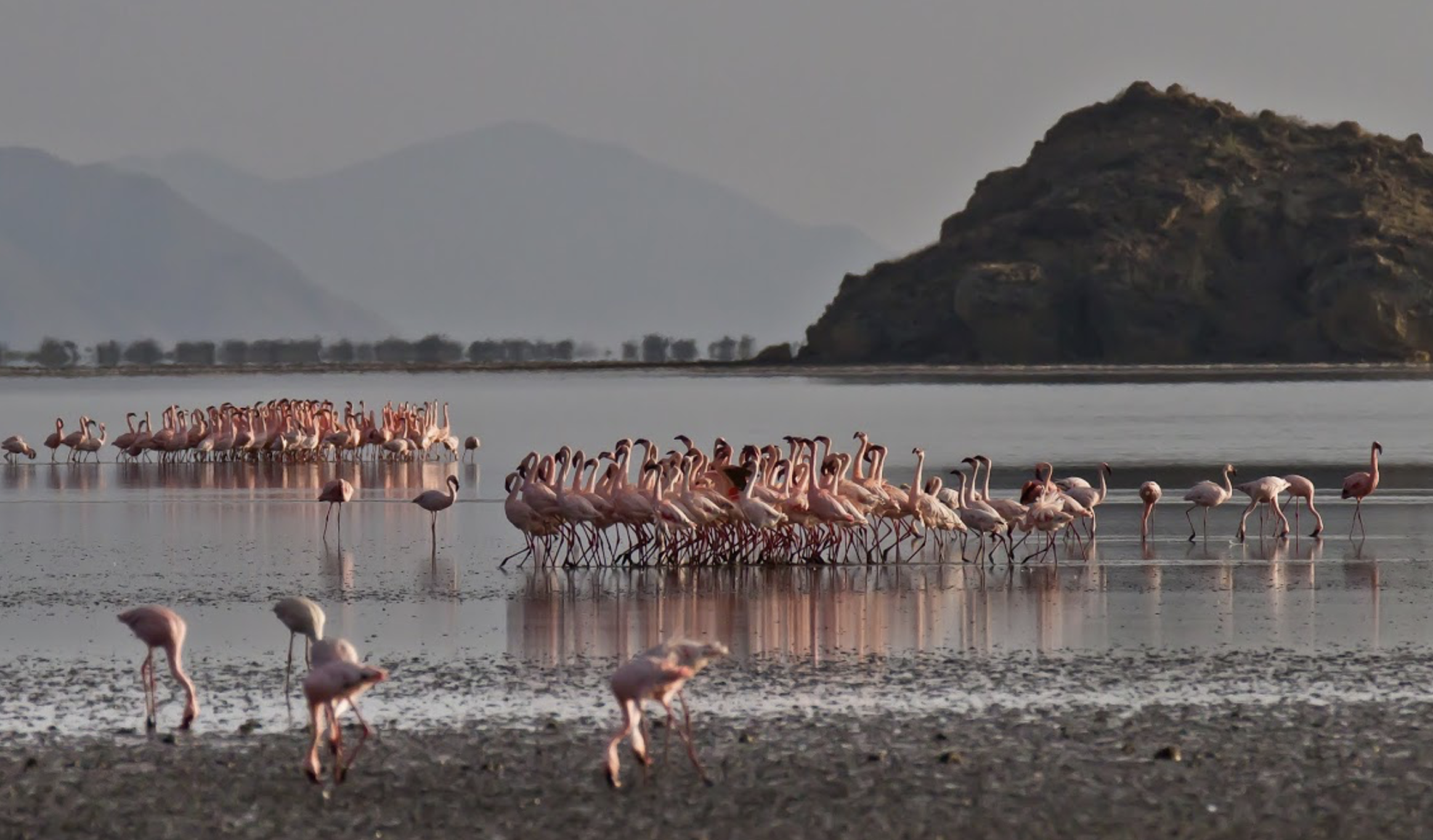
Flamingos at Lake Natron.
Our original plan was that once we arrived at Lengai and Natron we would camp out for a few days and explore the area. But that didn’t happen. Shortly after we arrived, Jan received word on his VHF hand-held radio that a flatbed four-wheel-drive truck was coming to get us and bring us back to Arusha. There was a nearby threat that Jan’s support crew in Arusha didn’t want to tell us about until we had been safely evacuated.
The threat, we later learned, was refugees. In neighboring Rwanda, the Rwandan Patriotic Front (RFP), led by Paul Kagame (a man who served as the country’s vice president between 1994 and 2000 when he became Rwanda’s sixth president and still reigns today, 21 years later) had taken control of the country and brought an end to the 100-day genocide which had left approximately a million souls dead. Refugees were pouring into Tanzania, fleeing for lives, making their way farther east and in numbers greater than anyone anticipated. Jan’s support team in Arusha decided that it was best our little adventure-travel group avoid a face-to-face confrontation.
So, we left.
***
I have not stepped foot on or around Lengai or Natron since that day in late June 1994; however, I have flown over the area, at least a dozen times, on short aerial hopper flights in small Cessna turboprop airplanes. As the founder and director of an international charity that supports impoverished youth and marginalized women across Tanzania and of Unite Tours Service Safaris, I have taken countless safari clients, donors, friends, and guests from Arusha out to the Serengeti National Park for safari and back again. The route takes us directly over Lengai, and from the sky above, I have gazed down inside the volcano’s still active northern crater and marveled at the sight of the flowing dark black lava pits and the rapidly forming weathered carbonatite ash cones.
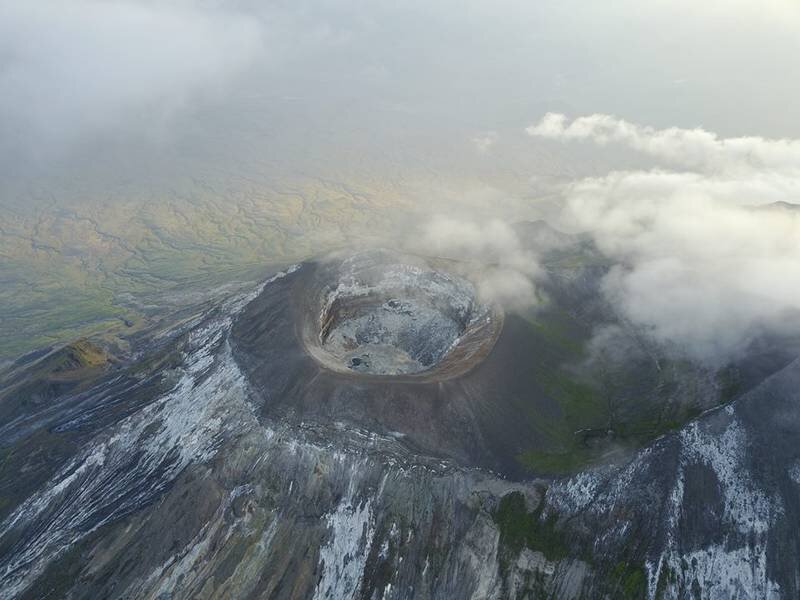
An aerial view of the summit of Ol Doinyo Lengai, The Maasai Mountain of God.
I will return to Lengai and Natron in 2022 when I am 50 years old. Instead of walking there from Arusha, I will fly to a nearby earthen airstrip, which was constructed in 2016. Like the handful of other travelers who find their way to this far-flung corner of Earth, I will stay at the only lodging available, the Lake Natron Camp, an eco-tourism venture designed, in part, to provide jobs for many of the local Maasai and to educate the international community about the critical need for land and wildlife conservation in the area. From there, I will attempt the steep, precarious, five-hour-up, five-hour-down climb of Lengai, which is hailed as “the most dramatic hike in East Africa,” at least Lake Natron Camp’s marketing team. Once safely down, settled, and rested, I will walk a few miles along one of the many well-forged Maasai cattle paths from Lengai to the Rift for a refreshing swim under a waterfall that flows from a single fissure in the escarpment wall. All the while I will search for the Desert Rose, the single flower that has adapted to this other-worldly environment. And, if I’m lucky, I will, once again, separate from self long enough to discernibly observe life, nature, and thought.

Photo Credits: Rafiki Projects; From Africa With Love; Volcano Discovery; Tom Selke. Flamingos by Helene Wallaert and Remy Simon.
Sources:
Lake Natron Camp.
World Wildlife Fund.
Britannica.com.
Wikipedia, The Arusha Hotel.
Wikipedia, Paul Kagame.
Introducing The Unite Food Program: Buying from the poor to feed the poor

Maria John Kwanga is a Unite Scholar. She is picture above (right) with her parents and two of her brothers working their family’s shamba (small farm). Maria and her family are why, in part, we are launching the Unite Food Program.
Whether it be her high-pitched, sweet, sing-song voice, her sparkling eyes and wide smile, her extraordinary faith (“I thank God I woke up this morning” is how she starts most conversations) or her huge heart (“I love you soooo very much” is how she ends most conversations), Maria John Kwanga, 21, is one of the brightest, most lovely and endearing young women anyone could ever have the pleasure of meeting. As a fully-sponsored Unite Scholar, Maria John is currently performing extremely well in Form 5 at the high-quality government Mtwara Girls Secondary School. She is a leader among her peers, guiding more than 100 students in the school’s Unite Club, through which Unite provides leadership training, career preparedness workshops, and exposure to a global network of powerful change agents through our Unite Passion Project. Maria John’s teachers report that she is highly motivated, empathetic, disciplined, and curious. Unite is challenging Maria John, and all of our 40 Unite Scholars, to work hard, dream big, think creatively, question the status quo, and do everything necessary to become the leaders of tomorrow.
Then Maria John goes home... to her large, loving, and extended family in the extremely rural and near inaccessible Makulu village in Dodoma, Tanzania, and the situation is dire. Her family lives in a hand-made earthen structure, which is currently eroding. (Unite is raising money to have it rebuilt.) Her parents, siblings, and many extended relatives survive in this harsh, arid environment by engaging in daily backbreaking labor -- preparing the earth, planting, tending, and harvesting-by-hand subsistence and cash crops. With no means to safely store food or protect their harvest from spoilage or pests, small-scale farmers like Maria John’s family have little choice but to sell at depressed market prices their only possession of value. Too often, what they earn is not enough to buy seeds for the next season, pay school fees, cover the cost of any kind of healthcare, or even prevent their families from going hungry before the next season, the most vulnerable time being between December and March when food prices skyrocket.
So, it is no surprise that when Maria is not in school, she spends her days hauling water and working in the shamba. There is little time for anything else. The situation is much the same for the near 30 million Tanzanians who survive on less than $1.9 a day.* This is a herculean problem with no quick or easy solution, but one that must be addressed in any and all ways possible.
Our response to this crisis? The Unite Food Program.
For the past few months, our Unite teams in America and Tanzania have been working in partnership with Tanzanian entrepreneur Upendo Kiondo and environmental scientist Clara Wilson Ngowi to launch the new social enterprise Unite Food Program (UFP), which is designed to empower small-scale farmers with a means of storage and a secure market for their crops at fair market prices as well as to provide organic, healthy, tasty, and affordable staple food options to all Tanzanian people. We have secured a partnership with A to Z Textile Mills Limited to provide UFP partner farmers with advanced technology—multi-layered hermetically sealed, pest resistant grain storage bags—which allows UFP to safely store freshly harvested crops without spoilage for more than a year. Additionally, we have opened, to date, one UFP “Outpost” in the extremely remote village of Sumbawanga in western Tanzania not far from the Zambian border, and we will soon launch our second “UFP Outpost” in the Katavi region.
Will you help us?
An angel donor has generously provided a $25,000 matching grant to fund UFP Phase 1. Please consider a tax-deductible gift of any size to help us reach our $25,000 goal so that every dollar donated can be DOUBLED!
CLICK HERE TO GIVE
or send a check to Unite The World With Africa Foundation, 49 Whitney Street, Westport, CT 06880.

Unite’s Program Director Anty Marche (with headscarf), UFP Director Upendo Kiondo (front in pink), Environmental Scientist Clara Wilson Ngowi (back right in pink), and Logistics Leader Gaudence Moshy (front left) traveled across large swaths of Tanzania in January 2021 meeting with small-scale farmers and Unite Scholars and their families to assess the quality of crops and establish key partnerships for UFP.
THE SECRET SAUCE:Hermetic Storage Technology (HST) AgroZ® Bag
Designed and manufactured by A to Z Textile Mills Limited in Arusha, Tanzania, the AgroZ® Bag are “multi-layered hermetic storage technology bags designed for the storage of maize, sorghum, rice, millet, and beans to protect against insects pests without using any pesticide dusts.” A single 100kg bag can safely store food items for more than a year and be reused up to three seasons, providing farmers with a secure, portable, and affordable option through which to store their harvests, for personal use and to use for cash crops. Unite is excited about UFP’s partnership with A to Z, which is one of the largest manufacturing companies in East Africa. In addition to providing the AgroZ® Bag, A to Z will also produce UFP’s packaging materials and provide agro-business training materials and expertise for our Unite Scholars and their families as well as all UFP partner farmers. A to Z is most widely known for its design and manufacturing of the Olyset®Net insecticide-treated mosquito net. Unite has worked with A to Z in past years to supply villages with these bed nets. A to Z also partners with such leading international organizations as the CDC, Acumen Fund, PSI, and USAID, among many others, in the global fight against malaria.

WHO BENEFITS FROM THE UNITE FOOD PROGRAM?
Small-Scale Farmers
Receive a secure market for their organic crops at an above-market price; two extra AgroZ® Bag (gifted by Unite) to use to store their crops to provide food for their families and to serve as a “bank” for future needs and emergencies; and trainings in agrobusiness optimization techniques and approaches.
Unite Scholars & their Families
Receive, as possible, a market for their cash crops; access to UFP Outpost agro-business machinery (rice & maize mills, tillers, tractors) as possible; and real-world experience in agrobusiness by working with UFP in various capacities.
Entrepreneurial Tanzanian Women
Unite Food Program is and owned and chiefly operated by Tanzanian women. And while we do have a few great men involved, UFP aims to employ and empower as many women as possible throughout the entire UFP supply chain... Farm to table.
Unite Brave Widows
Receive employment opportunities to assist with UFP food processing, packaging, and distribution. They will also sell UFP products in their Unite Brave Widow storefront.
Consumers
Receive organic, high quality & affordable UFP food items, all grown and stored with no chemicals or pesticides
Unite the World With Africa Foundation
Receives a percentage of UFP’s net profits through UFP’s corporate social responsibility campaign (CSR), empowering Unite to further our mission.

Unite Scholar Pili Gabanza is pictured here working her family’s shamba (farm) in the Katavi region of Western Tanzania. The Unite Food Program (UFP) will soon provide a secure market for Pili’s family’s maize and rice harvest at a fair-market price. UFP will also provide them with air-tight, pest-resistant grain bags in which they can safely hold back and store a portion of their crops to feed themselves throughout the year and to serve as a “emergency” fund (food that can be held and later sold, when prices rise, to deal with any family needs or emergencies).
UNITE FOOD PROGRAM OUTPOST #1: Sumbawanga, Rukwa Region, Western Tanzania
In December 2019, 22-year-old orphan Baraka Sadam Saul applied for a spot in our Unite Scholars Program. Unfortunately, he scored Division 2 on his Form 4 leaving exam (Unite requires Division 1), so he was not chosen. However, Unite’s Program Director Anty Marche sensed great potential in this young man and, independent of Unite, she began investing in Baraka, little by little, over time. After receiving and repaying many multiple small loans (of $25-$50 each), Baraka was able to purchase a small maize mill machine to fill a huge need in his rural village of Sumbawanga where there was no mill to process the local crops and the local farmers were suffering.
The UFP team visited Baraka and his young brother Uwezo in January 2021 (see their first in-person meeting here) to draw plans, clear the land, purchase supplies, and begin laying the foundation for UFP’s first official “Outpost” food processing plant, storage, and sales location. Inside the now completed structure (below), Baraka and Uwezo now operate their maize mill and a new UFP rice processing machine. The building also includes a bedroom for Baraka and Uwezo as well as a small kitchen and toilet. Baraka and Uwezo have provided full-time employment to three more young men and, to date, have served more than 600 customers from six surrounding villages. Currently we are in the process of purchasing a UFP power tiller machine that will “live” at this UFP Outpost to be used by Baraka and Uwezo as well as by Unite Scholars when they are home over school holidays. The tiller will facilitate more efficient farming of surrounding shambas as well as the transportation of crops, allowing the UFP team to “pull” in new customers and further grow this small-but-already-thriving business.

I extend my sincerest thanks to every person who has supported Unite The World With Africa Foundation over the years; to our team of advisors for their time, generosity, and expertise; to our Board of Directors for their remarkable commitment and for making it possible for 100% of every donor dollar to be allocated directly to our programs in Africa; and to the courageous souls I have met along the way who have given up everything to live and work on the frontlines. There are billions of people on Planet Earth in desperate need, and those we serve are most worthy and deserving. They—and you—fuel my passion and help me resist any occasional tug of fatigue or allure of apathy.
May we continue with our individual and collective efforts to love, heal, and honor one another and ourselves. The stakes are high. All outcomes are possible. Thank you for your time and for your continued support of Unite.
Yours in service,
Anne Wells
UNITE THE WORLD WITH AFRICA FOUNDATION, INC. IS A 501C3 TAX-EXEMPT PUBLIC CHARITY. EIN: 47-2329890.
CONTACT: ANNE WELLS, FOUNDER & DIRECTOR ANNE@UNITEAFRICAFOUNDATION.ORG * 314.239.3997 USA
Souces: OPEC Fund for International Development & Borgen Project
This Valentines Day we honor family, love, and loss
I am deeply saddened to share the news that our lovely Unite Scholar Pendo Chitulo lost her beloved mother Albina Chitulo this week to a sudden and unexpected illness.
Pendo, 21, lives with her five brothers and sisters — Anthony, Elibariki, Mary, Johnbosco and Laurent — in the Bihawana village of Dodoma Tanzania. Pendo’s father abandoned the family when Pendo was young, and her mother had since struggled to support their basic needs by making grain alcohol and selling it in the streets. It was, and continues to be, a difficult and dangerous life.
Pendo is the only one of her family to go to secondary school. In 2019, she was admitted into Unite’s highly competitive Unite Scholars’ Program. She is now in her second semester of Form 5 (11th grade) at the government Mtwara Girls Boarding School in Mtwara Region. Pendo is extremely bright, and her goal is to continue with her education to become a lawyer and fight for women’s rights, especially for those who are victims of domestic abuse and sexual assault.
For years Pendo has faced relentless unwanted sexual advances in her impoverished community where many believe she would be better off pregnant than in school. Albina was Pendo’s only protector and advocate for her education, and now Albina is gone. Unite is extremely concerned about Pendo and her siblings as they have no extended family to help provide for, feed, and care for them.
To that end, we are launching a campaign to try and raise $20 a day for the next two years (~$15,000) to provide the bare necessities for Anthony, Elibariki, Mary, Johnbosco and Laurent to allow Pendo herself to complete her A-levels, higher-secondary schooling.

Pendo and her mother outside their family home in January 2021. Click HERE to see their family home.
In the spirit of love, on this Valentines Day, please consider making a tax-deductible donation to help Unite provide for Pendo and her siblings throughout this most traumatic and challenging time. In January, our Unite Program Director Anty Marche traveled to Tanzania and visited Pendo at her home. The family’s living conditions are extremely difficult. While on site, Anty purchased for beds, plates, cups, buckets, and cooking items for the family. The children are now orphans in extreme need. With your help, we will do everything possible to ensure their safety and survival.
Click on the links below to see a few short videos of Pendo:
Pendo’s New Year’s Message to Unite, January 2021
Pendo shows Unite’s Program Director Anty Marche her home, January 2021
Pendo introduces her lovely mother Albina, January 2021
Pendo says thank you for Unite’s gift of beds, mattresses, and supplies for her family, January 2021

Pendo with fellow Unite Scholar Loveness at a Unite leadership training event in Dar es Salaam, December 2020.

Pendo (pictured second from the left with Anne Wells and fellow Unite Scholars in February 2020) is a Unite Scholar whose education is being sponsored by the Kit Merriman Scholarship Fund for Girls.

Pendo with Unite’s Program Director Anty Marche in January 2021 during their shopping trip to purchase beds, mattresses, and supplies for Pendo’s family.
How Can I Do More?
One University Student’s Account of Global Change and Compassion During Covid-19
Written by Lila Wells, Co-Founder and Director of the Unite Passion Project.
Let me be clear: this story is not one in which I take a starring role. Rather, it celebrates those in my life I feel deserve recognition not only as global change agents, but as envoys of compassion in action.
March 2020
A 19-year-old college freshman with less than five months of independent living under my belt, the world was my oyster and I was not yet ready to leave the comfort of its calcified shells. Towards the beginning of March, the influx of the COVID-19 pandemic into the U.S. downsized my universe from that of a college campus—where adventure was inevitable—to my childhood bedroom where, for 10 hours a day, I sat at my desk attending Zoom lectures and contemplating a question for which I direly needed an answer: How can I do more?

This question was one made easier when sitting a room away from a global change agent and my own personal hero: Anne Wells, my mom. At 19, she journeyed a world away and spent four months in a country which assumed a permanent fixture in her heart—Tanzania. Many adventures and decades later, she founded Unite The World With Africa Foundation in 2014. Unite is an international NGO empowering extraordinary-yet-impoverished and marginalized youth and women with quality education, health, leadership and business development programs to foster independence and long-term success.
In 2018, my mom and Unite embarked on a new venture to sponsor the A-Level education of uniquely-talented-yet-impoverished Tanzanian scholars through the Unite Scholars Program. Working in tandem with the NGO’s Tanzanian team and Program Director, Anty Marche, 42 scholars have been chosen to date through a highly-rigorous selection process based on academic excellence, personal advocacy, leadership, and extreme financial need.
Yet while I was able to manage my education in quarantine through Zoom courses, our scholars faced a vastly different reality at the height of the pandemic. Hailing from remote and under-resourced parts of the country, they lacked the infrastructure for online learning and slipped into a sort of educational purgatory; school was suspended, and our scholars had little resources with which to continue learning. [Cick HERE to see the home of one of our Unite Scholars Maria John Kwanga.]
Education is key in surmounting cyclical poverty and, as less than 3% of Tanzanian students enroll in A-Level education, our scholars had already beaten the odds in their schooling advancement. Continuing education during the pandemic was and is crucial for their success. With that in mind, I devised a scheme for educational enrichment using the most powerful resource we each had at our disposal: each other.
This, this, is how I can do more.
May 2020
I called on teammates I didn’t know I had—high school acquaintances, college friends, extended family, strangers, and my best friend from down the hall of my freshman dorm. Together we did what I first felt was impossible: uniting youth from opposite sides of the planet in a mission for self and communal growth. The Unite Youth Ambassador Program was born with the mission to cultivate connection, camaraderie, and compassion in the time of COVID-19. First only an idea I dreamt up in a walk around my neighborhood, friends (who soon became family) from universities across the U.S. graciously signed onto my passion project and pledged to donate their time to Tanzanian scholars they had yet to meet.
For eight weeks, I worked alongside these 11 American college students and 23 Tanzanian scholars as they built powerful bonds, explored the intricacies of physiology, debated philosophy, assembled resumes, called and texted daily via Whatsapp, sang together, reenacted comedy skits, and exchanged I love you’s.

Six Unite Ambassador-Scholar groups that participated in the program.
My singular Northwestern quarter of Kiswahili hardly prepared me for daily communications with multilingual Tanzanian students, widows, and the Unite leadership team. But they were patient teachers, not only to me but also to my fellow ambassadors, who eagerly exchanged their English, Spanish, and French for new Kiswahili terms from their Tanzanian friends.
The first time I cried was when listening to a Whatsapp audio exchange between my friend CJ and Tanzanian scholar Loveness Apaeli. The two came from vastly different circumstances: CJ an environmental engineering major at Northwestern University and Loveness a high-achieving scholar whose family only recently built their first pit latrine, with a Unite grant. Yet all differences disappeared as they exchanged messages discussing vulnerability, self-confidence and self-love in a world seemingly devoid of it. Their mutual support and outpouring of love after less than two weeks of knowing each other was both overwhelming and an affirmation of what the Unite team and I had already begun to observe; this program, this team was love in action.
July 2020
This vignette came many happy-cries later, and emerged as a key component in my next collaborative Unite venture: The Unite Passion Project.
The Unite Ambassador Program quickly drew to a close as July began and the Tanzanian government sent our scholars back to school. The familiar question—How can I do more?—began to creep back into my consciousness. Yet one Whatsapp conversation in particular caught my eye. My friend and peer, Danny, was discussing aspirational identities and his passions with Unite Scholar, Imani Faustine. As Danny raced between different potential career paths and outlined his passions for his friend, Imani asked the following: “Dan, you can have more than one dream?”
Imani touched on a question that most, if not all, youth and young adults ask themselves daily; What is my passion? Can I have more than one? Am I on the right path? Yet it especially resonates with our Unite Scholars who, when asked what they want to do with their lives, often deliver the same set of responses: “to be a doctor, pilot or engineer.”
This may be, in part, because their passions for medicine, aviation, and science is what drives them. But more often than not it is because these young people, most of whom come from remote and under resourced communities, know of nothing else to dream. As someone who began her collegiate career as a steadfast Chemistry major, before switching to Computer Science and finally landing on Sociology, Imani’s comment struck a chord in me, prompting me to reevaluate my own relationship with passion, career paths, and self-exploration.
This is how the Unite Passion Project was born.
With joint goals of career exposure and self-reflection, I launched the Passion Project alongside a handful of my Ambassador peers and the Unite leadership team as an international guest speaker platform. I spent the summer emailing strangers, titans of industry, professors, and my peers asking them to respond to a deceptively simple question—What is your passion?—in video form. And, to my surprise, they responded. En masse.
The YouTube-based platform grew from five, to 10, to 20, and, to date, 92 guest speaker videos from all over the world. Each submission was not only an act of kindness, but also one of compassion, in which strangers, understanding the uncertainties of young adulthood, detailed their life’s story for the world to hear. And the world did.

A few of the ~100 professionals from around the world who have contributed Passion videos to our program since its inception in August 2020. Click HERE to watch their videos, and more, on our YouTube platform.
Unite instituted seven Unite Clubs in secondary schools throughout Tanzania, where approximately 1,000 students and faculty viewed and discussed Passion Project videos, approaching each with the same intention and honestly the speakers did in making them.
And, in its inception and journey thereafter, a quote from my mom remained evermore true:
“In this time of widespread turmoil, fear, and suffering, we can—and must—focus on what brings joy. We must share what feeds our spirits and ignites our minds, bodies, and souls. Because what opens minds and hearts will ultimately be what unites us as human beings.”
– Anne Wells
November 2020
Unite’s approach has always been holistic. That’s why, when approached by Program Director Anty Marche’s sister, Upendo, with a new opportunity to support our scholars and their families, we were ready and willing to execute it. I say “we,” but this project was and is wholly due to the work of Upendo, her husband Romanos, Anty Marche, Clara Ngowi, and my mom.
Dubbed ‘Operation Chakula,’ this venture buys from small-scale farmers across Tanzania, holds the harvest, and repackages food supplies in smaller quantities to sell at affordable retail prices to communities in need.
In buying from the poor during harvest season, using advanced technology to safely store and protect the food, and reselling to those in need later on, Operation Chakula circumvents a market which inherently disadvantages the Tanzanian poor. In harvest season, market oversaturation plummets crop prices, yet most small-scale farmers have no opportunity nor the technology to safely store their food to sell later on. In the off-season, a few choice, wealthier farmers, sell their stored crops at an expensive price to consumers, but a virtually unattainable price to the poor.
On a mission to buy from the poor to feed the poor, Operation Chakula addresses regional and nationwide hunger while supporting the very demographic we seek to uplift. As most of the Unite Scholars come from extremely impoverished, small-scale farming families, they often return home on holiday to the stresses of poverty, food shortages, and hunger. To change this is non-negotiable. Operation Chakula, to me, is not only strategic, creative, and empowering, but it is also an act of compassion, in which powerful minds from the U.S. and Tanzania collaborate to address a core human issue: hunger.
January 2021
2020 has run its course and while its suffering has been immense, it has also offered us an opportunity for compassion and advocacy unlike any other. A year ago, I would’ve never imagined a Unite Youth Ambassador Program, a Passion Project, or an Operation Chakula, nor would I have had the confidence to assemble a joint collegiate taskforce-for-change on opposite sides of the world.
Yet in times of turmoil, we are granted the rare opportunity to rise above and work collaboratively towards the greater good. We can, we have, and we will continue to practice compassion, camaraderie, and vulnerability. We will continue to make authentic connections with those we admire both domestically and abroad. We will practice compassion because, in a world so divided, it is needed now more than ever.
Compassion is CJ and Loveness. Compassion is Danny and Imani. Compassion is Upendo, Romanos, Anty, Clara, and my mother. Compassion is love in action. And may this year bring so much more.

Lila Wells (pictured above in 2015 visiting a government primary school in Tanzania) is now a sophomore at Northwestern University in Evanston, Illinois, studying Sociology and Legal Studies (intended). She has traveled to Tanzania in 2013, 2014, 2015 and 2018 to help support Unite programs. Since 2014, Lila has served as Unite’s volunteer as well as Unite’s social media intern. In 2019, Lila took on the role as a Unite’s Collegiate Youth Ambassador Manager and founded and directed the UNITE Youth Ambassador Program in the summer of 2020. Lila then moved on to found and co-direct the UNITE Passion Project. Lila currently serves as the project's Videographer, Executive Youth Outreach Coordinator, and Webmaster.
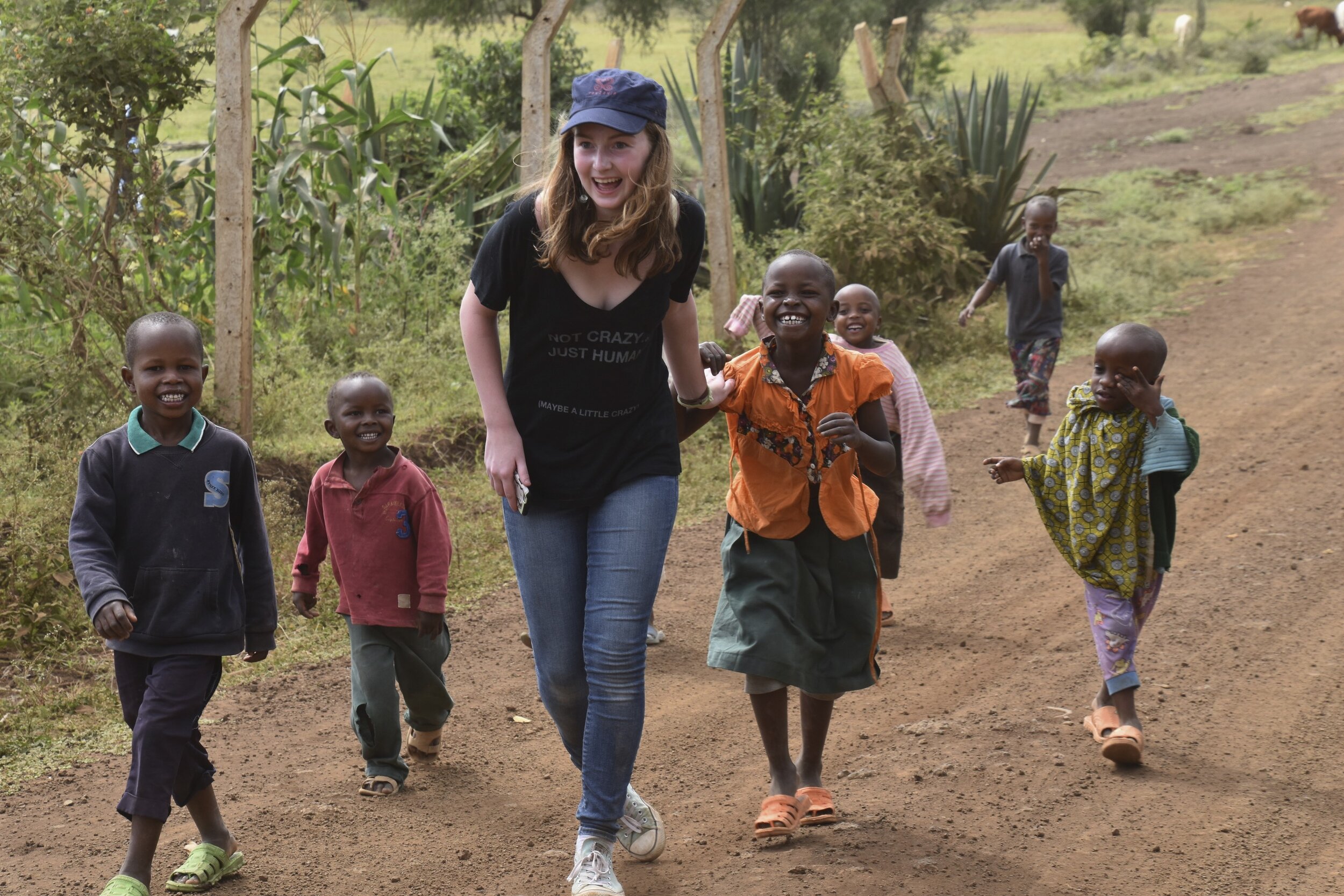
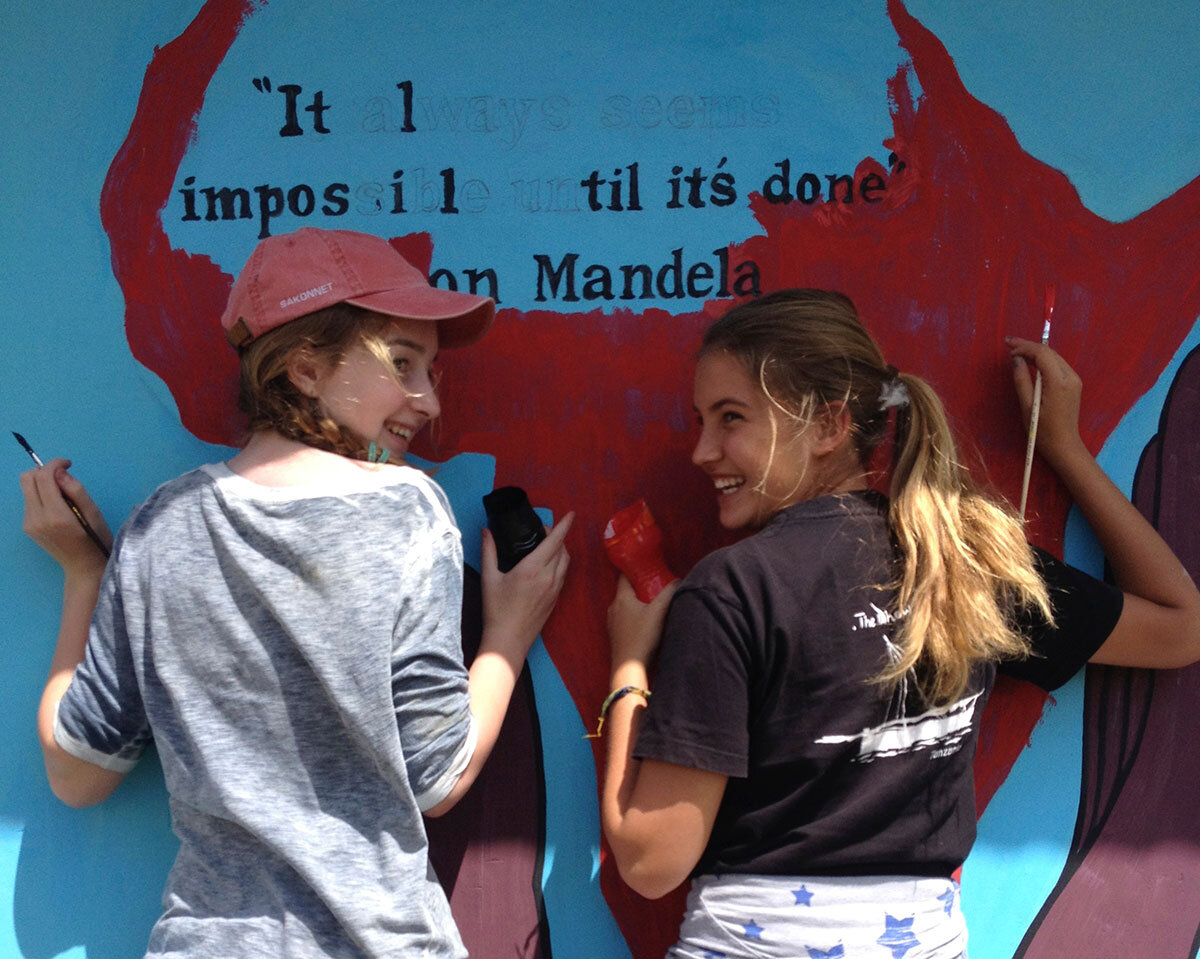
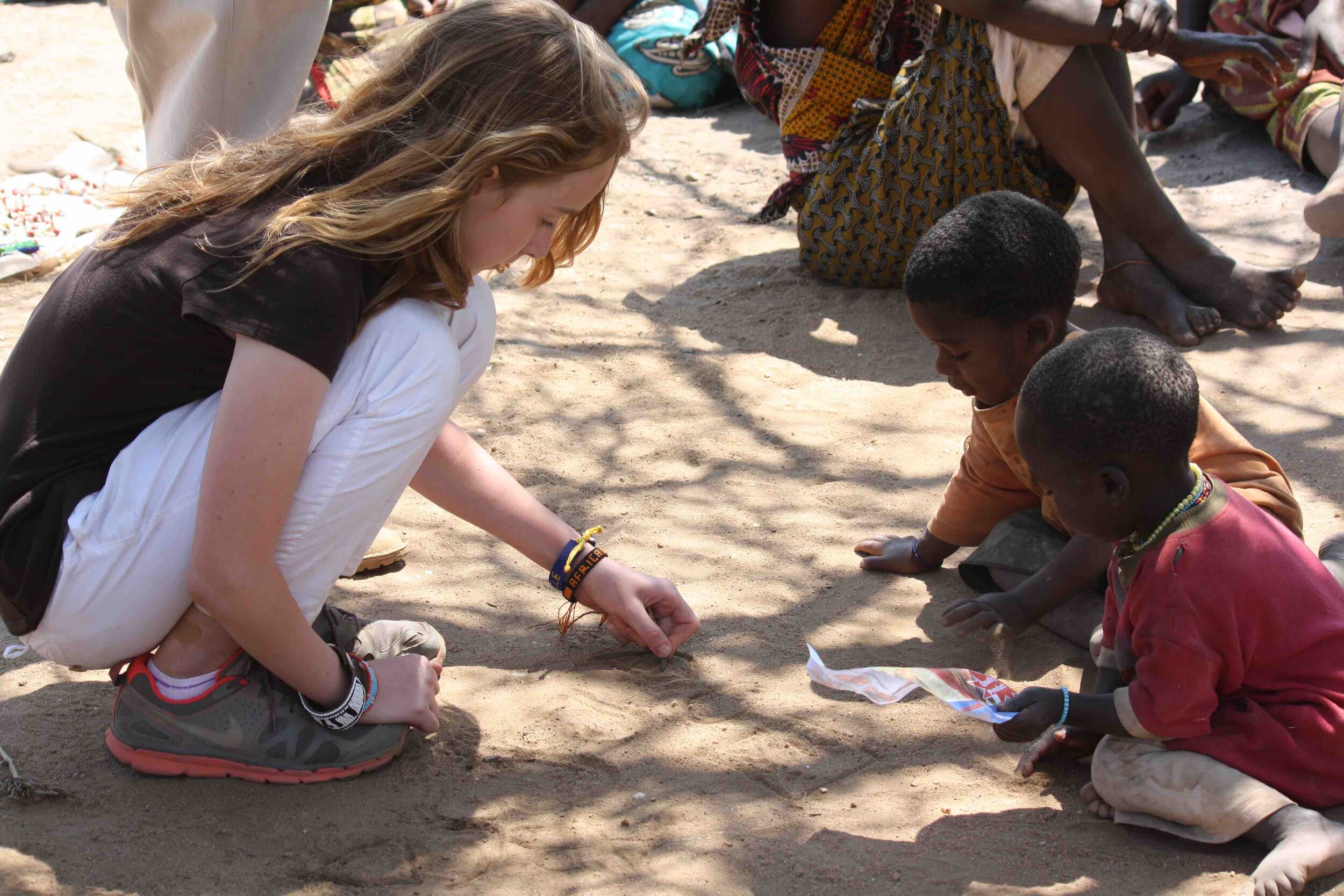
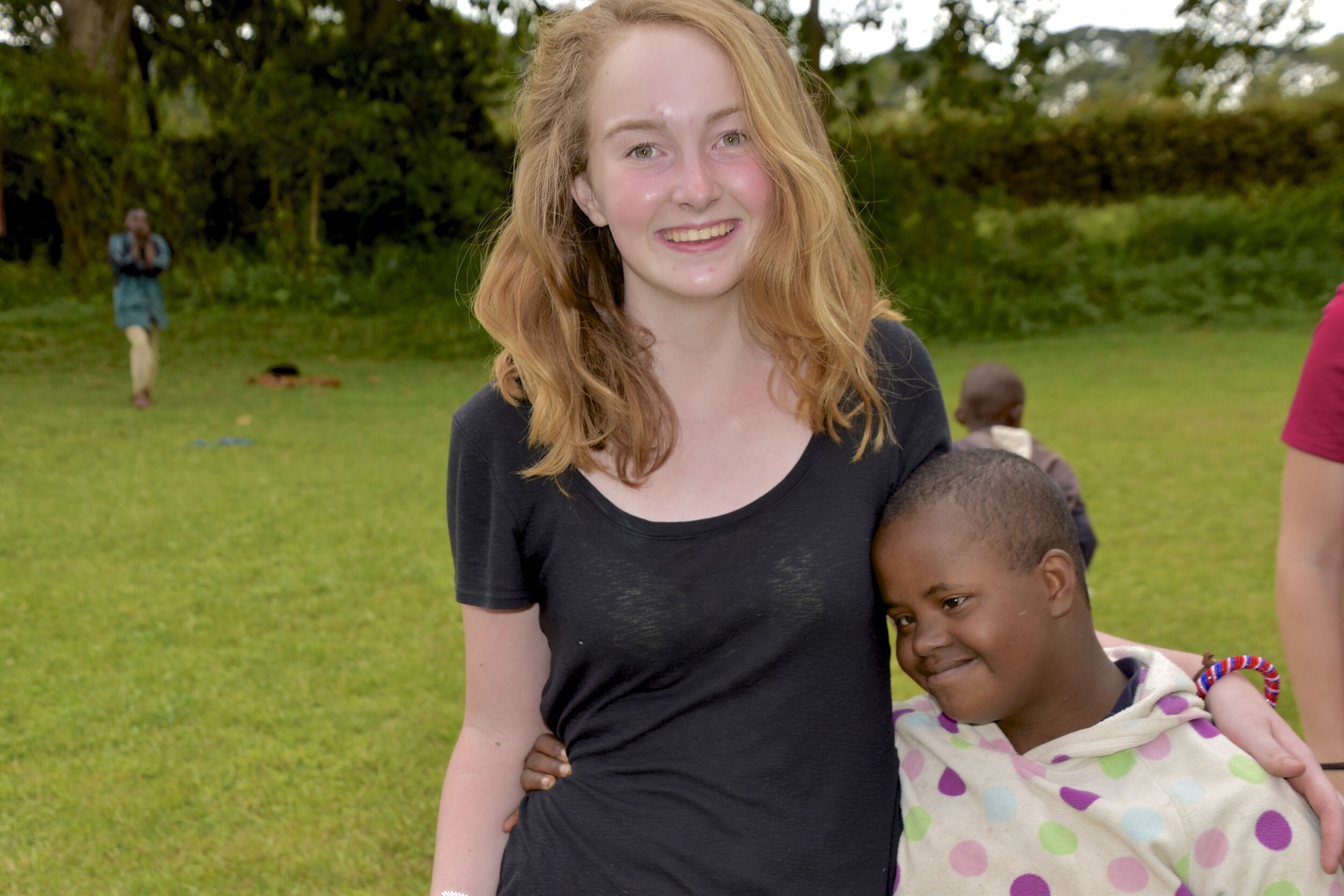
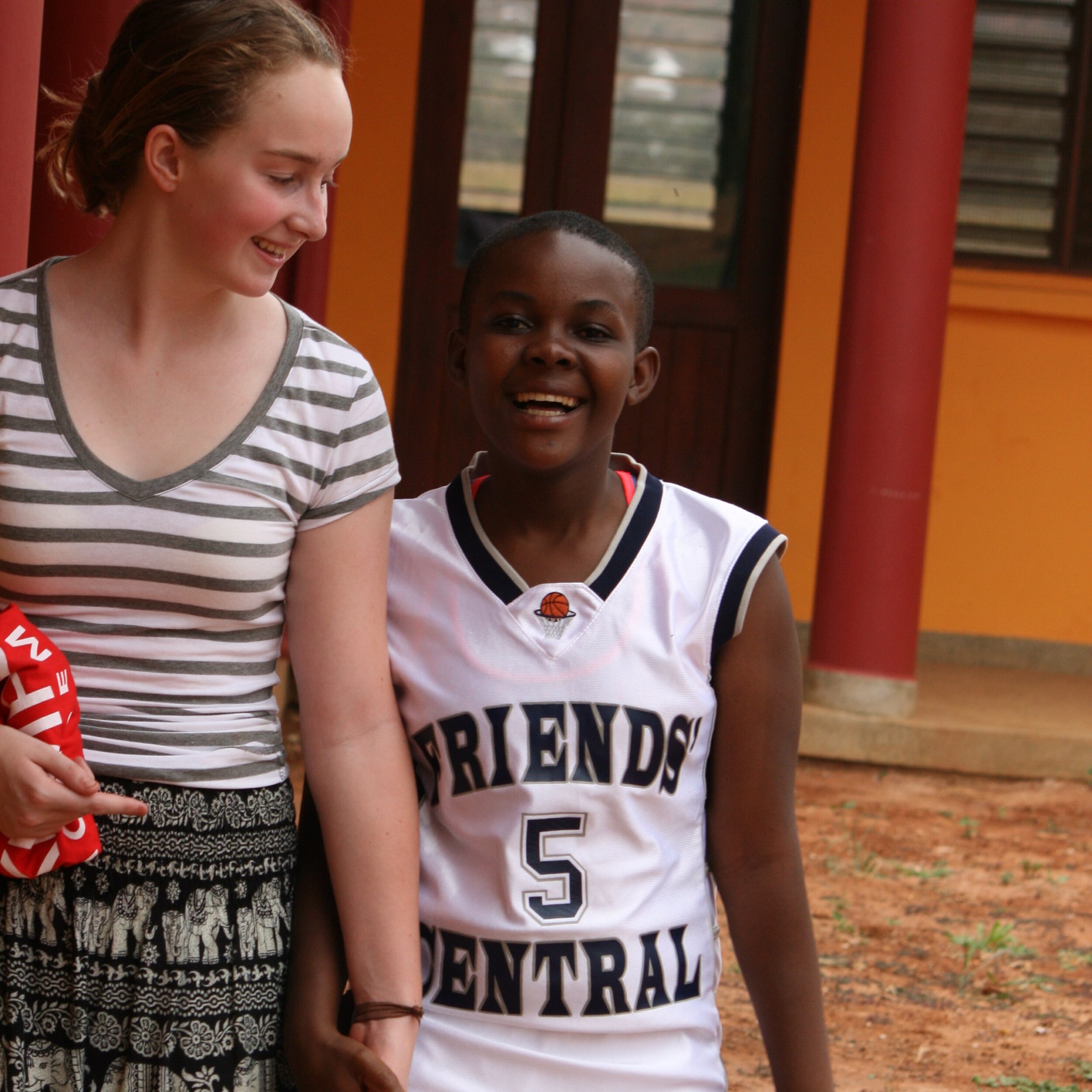
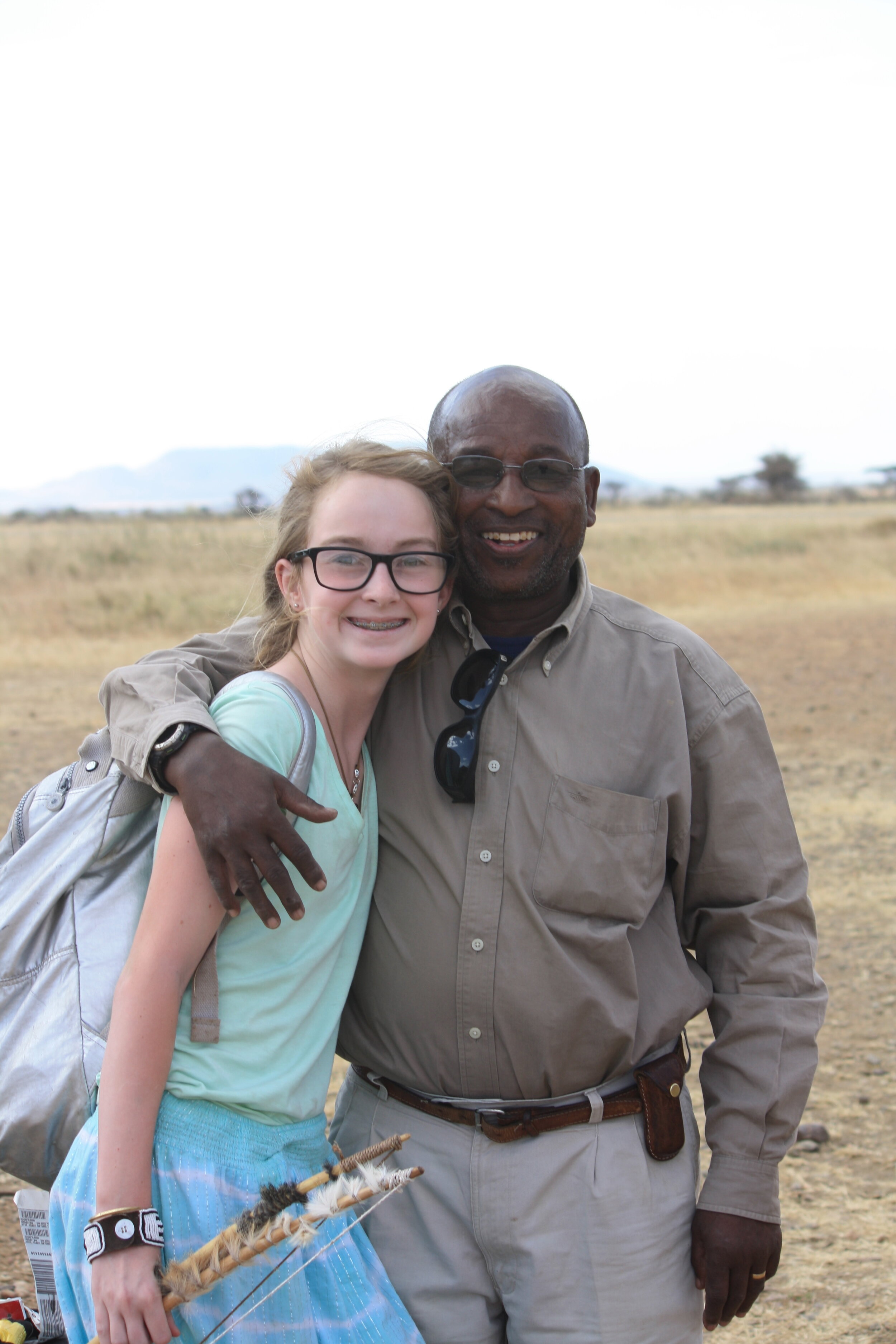
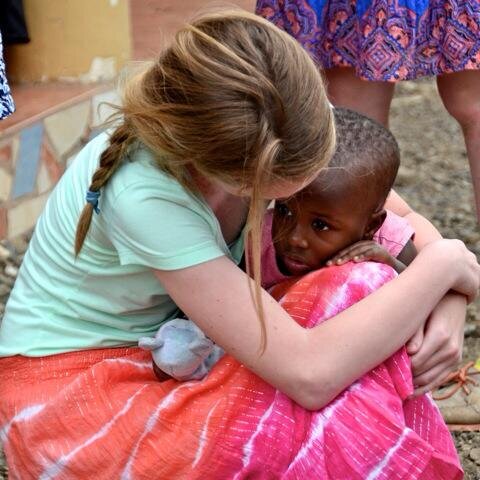
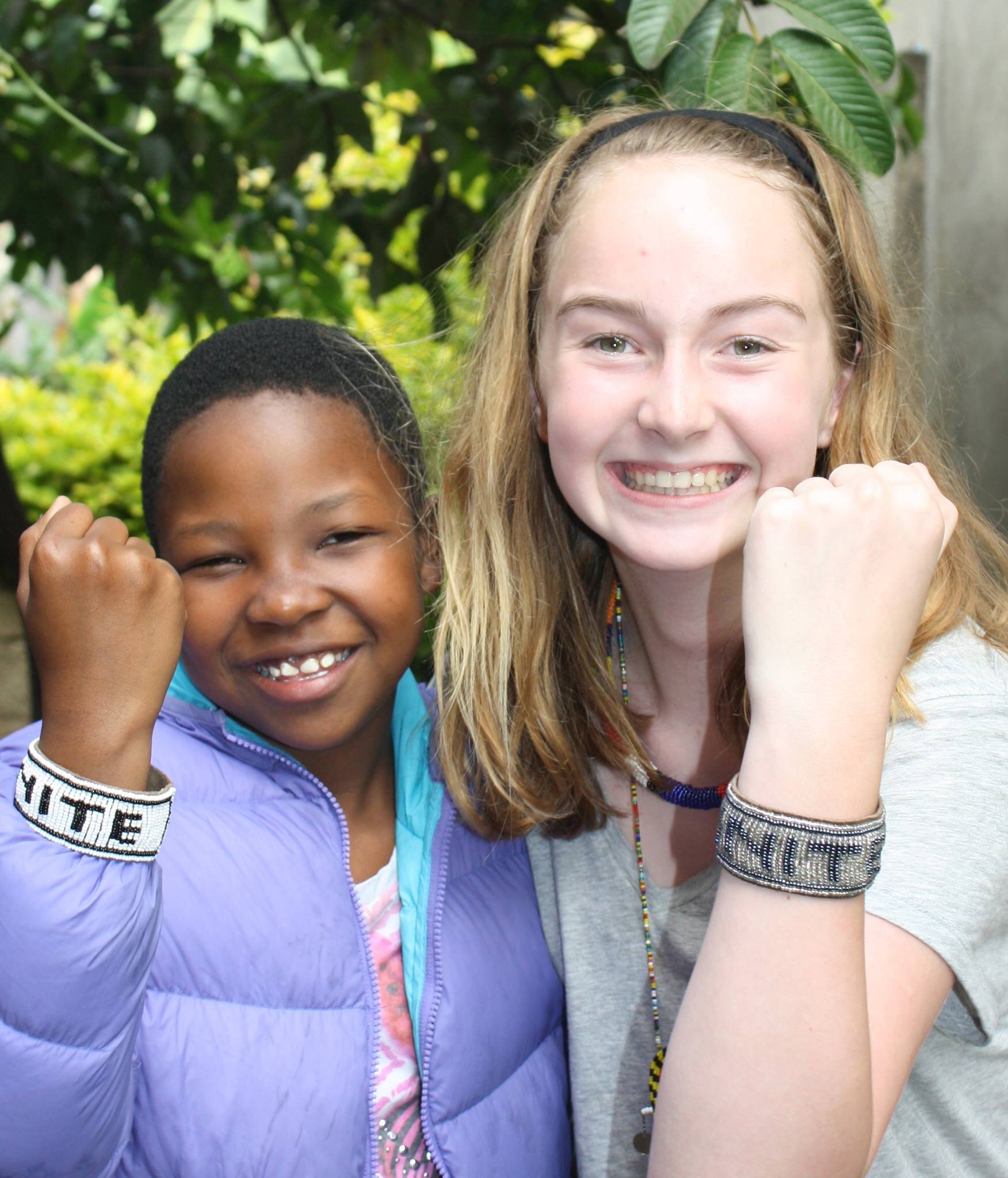
To make a tax-deductible donation to support the programs of Unite The World With Africa, please click HERE.

Unite Scholars attend a STEM Boot Camp in Tanzania
Over the New Year’s holiday, 10 of our Unite Scholars participated in a highly competitive and selective five-day-long STEM Boot Camp sponsored by Projekt Inspire in Tanga, Tanzania. More than 70 students came together from schools across the country for an intense study of Science, Technology, Engineering, and Mathematics.
“We host annual STEM youth boot camps for secondary students as a way to encourage and steer critical thinking, problem solving, and innovation in the world of rapidly evolving science and technology, particularly for the Tanzanian industrial economy,” said Projekt Inspire Director Dr. Lwidiko Mhamilawa, whose boot camps challenge talented youth to apply their STEM educations to the fields of agriculture and fisheries, renewable energies, and water management.*
“We learned about how to identify and tackle real-life problems in our communities,” says Unite Scholar Elina Green, who enjoyed the opportunity to apply theories to the practical world in hands-on and interactive manners.
With their fellow Projekt Inspire teammates, our Unite Scholars developed a computer program to assess and measure water quality, and they presented inventions and projects to the group for feedback to support further development.
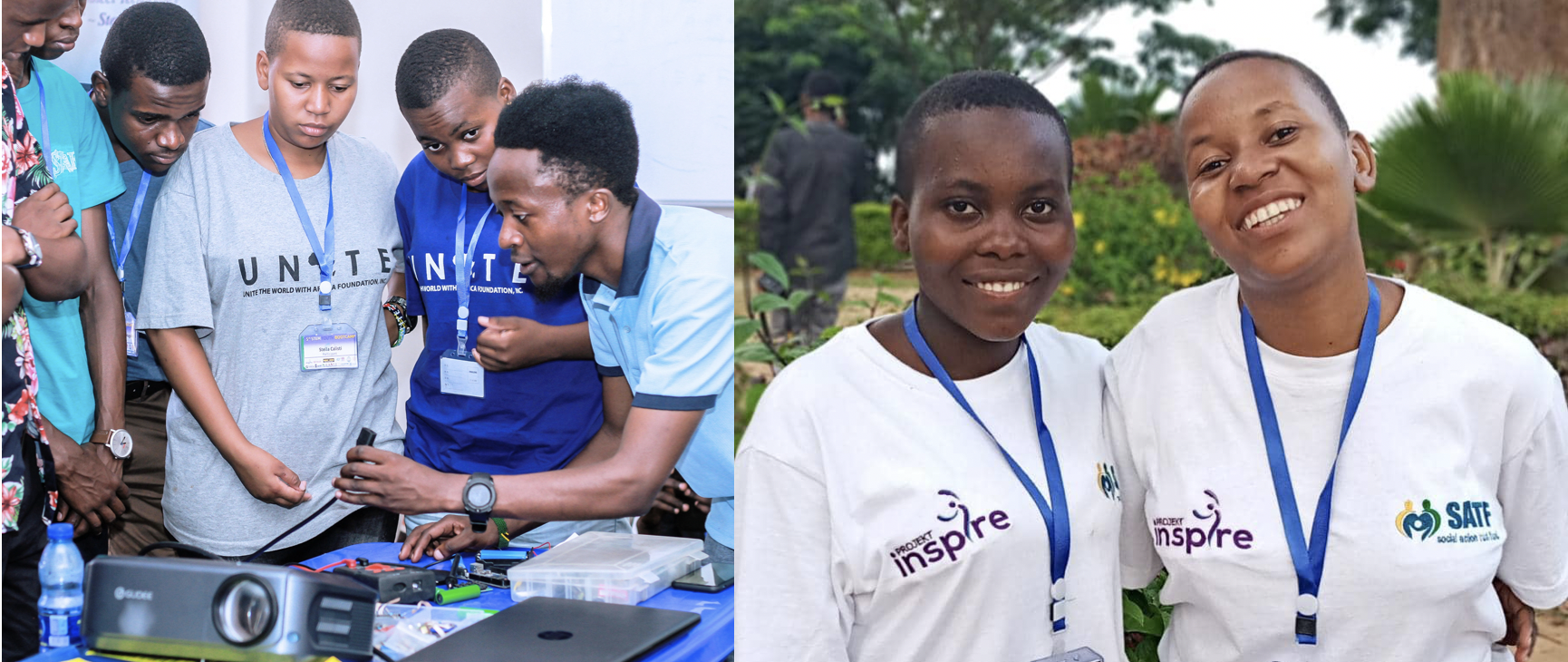
Unite Scholars Stella and Elina participated in Projekt Inspire’s technology class and were introduced to Arduino, an open source language used to design electrical equipment. Elina presented a pilot program for Menstrual Hygiene Management for women and girls and was chosen as the second winner in Pilot project out of 30 competitors.

Unite Scholar Ashura (center in white) participated in Projekt Inspire’s Science Group, which focused on food production and preservation and the “transportation system” within the human body.

Unite Scholar John John (second from the far right) attends a science class with Projekt Inspire students from across Tanzania.

Unite Scholar Michael works on his invention in the technology group.

Unite Scholars Stella, Neema, Elina, and Ashura. Girl Power!
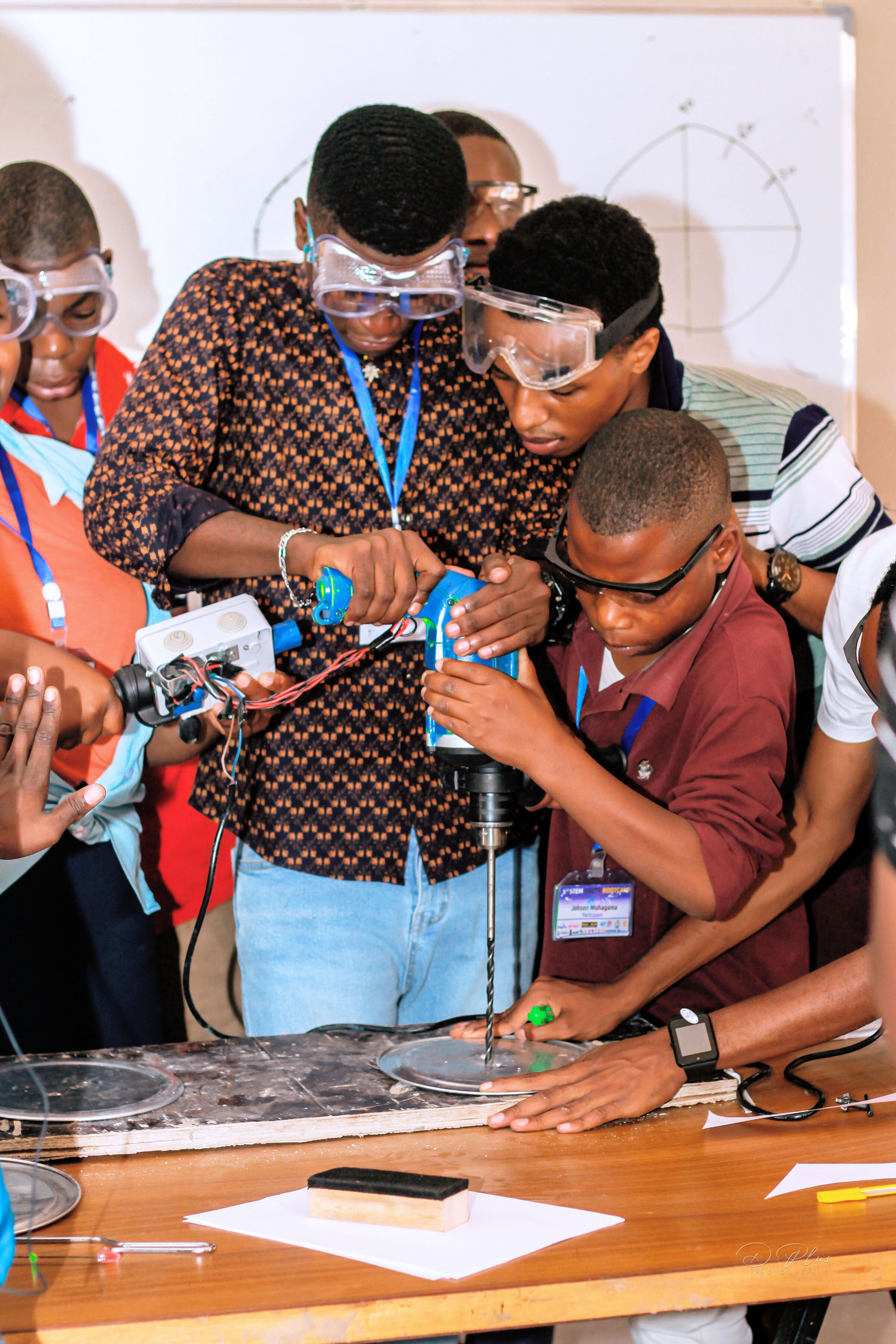
Unite Scholar David Bitaho at work in Projekt Inspire’s Engineering class.

(Left to Right) Unite Scholars Luther, Winson, John John, Neema, Stella, Michael, Ashura, Lazaro, Elina and David at the Projekt Inspire STEM Boot Camp in Tanzania. January 1, 2021.
*Article from The Guadian by Gertrude Mbogo published on January 2, 2021.

Introducing Operation Chakula: Buying From the Poor to Feed the Poor
THE CHALLENGE
Unite is educating some of the best and brightest teenagers and young adults in Tanzania. We are ensuring their quality A-level educations as well as providing them advanced international mentorship; leadership, life-skills, business, and soft-skills of professionalism trainings; environmental education programming; access to the arts, music, and all kinds of creative endeavors and advanced STEM trainings; and so much more.
However, since most of our Unite Scholars come from extremely impoverished families who eke out meager livings as small-scale farmers, when our Unite Scholars return to their homes over school holidays they are often faced with the intense stress of extreme poverty, food shortages, and hunger.
UNITE’S RESPONSE
To address this challenge, in partnership with Tanzanian business-woman Upendo Kiondo and environmental scientist Clara Ngowi, we are launching a new program called Unite Operation Chakula (“chakula” means “food” in Kiswahili). Here is how it works:
Our team purchases maize, rice, beans, and ground nuts from our Unite Scholars and their families as well as from other small-scale farmers in need across Tanzania to provide them a market and income;
We hold the harvest in air-tight, pest-resistant 150kgs-AgroZ bags in secure central locations (the food can be held safely in these bags for months and even years);
3. Our team repackages the food supplies into smaller-sized quantities and sells the product at affordable retail prices to communities in need.***
We are buying from the poor during harvest time, using advanced technology to safely store and protect the food,
and re-selling food to those in need.

Click on the hyperlinks below to see the reality of life for small-scale farmers in Tanzania:
Unite Scholar Loyce shows us the work of harvesting rice by hand.
Unite Scholar Loyce shows us how she cleans and packages her rice.
Unite Scholar Maria John shows us how she harvests ground nuts.

To learn more about Unite’s Operation Chakula, email anne@uniteafricafoundation.org.
To make a tax-deductible donation in support of our work, click HERE.
May 2021 bring peace, health, joy, nourishment, and prosperity for all.
Merry Christmas from Unite
This week a few of our Unite Scholars, Unite “Brave Widows,” Unite team members, and Unite Passion Project speakers gathered in Dar es Salaam to celebrate and give thanks for our Unite family around the world. Here, a few fun photos for your enjoyment and links to two short videos that really should make you smile. Thank you for making the miracles of Unite possible with your love, kindness, and generous support.
Together all things are possible. Cheers to 2021!
CLICK HERE FOR OUR UNITE SCHOLARS CHRISTMAS SONG & DANCE
CLICK HERE TO SEE A FEW OF OUR UNITE BOYS PERFORM ON THE BEACH FOR YOU ALL


To make a tax-deductible donation in support of our work, CLICK HERE
or send a check to Unite The World With Africa Foundation, 49 Whitney Street, Westport, CT 06880.
Asante sana! Thank you!
The Anatomy of Resilience: A Different Kind of Post
Over the course of the past few months I have had the great pleasure of spending extensive time with my dear friend Kristin Hocker to research and write this article “The Anatomy of Resilience” (shared below). Kristin has been an important member of our Unite family over the years as she co-led our Strides for Strength walk-a-thon in 2015, which enabled the purchasing of prosthetics and medical devices for dozens of amputees and people living with disabilities in Tanzania. Kristin, after losing her leg to a necrotizing fasciitis bacteria in 2013, has launched her own social media campaign on Instagram @kristinpcan to share, motivate, inspire and encourage other amputees (and all of us humans who face unexpected hardships and setbacks) to embrace vitality, love, beauty, strength, health, friendship, faith, and community and to live their best lives. Thank you Kristin for allowing me to share your inspirational story. And a very special thanks to photographer Harriett Wells (Instagram @harriettwellsphotography) for these stunning images.
This holiday season may we celebrate strong, powerful, resilient, courageous women ALL over the world!

Photo by Harriett Wells.
The Anatomy of Resilience
By Anne Wells
***
With just a thin pink yoga mat as a cushion from the hardwood of her front porch in Bell Island, Rowayton, Connecticut, Kristin Hocker lay on her right side with her left arm stretched up to the warm breezy October sky. The deep voice of her trainer Sean Mageau coached her through her iPhone, which was balanced on a table against an oversized orange Halloween candle. “Ok Kristin,” said Mageau, “now try to lift up into a side plank. Let me see the air between your hip and the mat.” Kneeling behind her, physical therapist Maureen Meehan supported Kristin’s pelvis. Kristin’s face winced as she strained with effort to activate her remaining muscles. “Good job,” said Meehan. “We didn’t catch any air, but I could feel muscles firing.” Kristin collapsed and pulled off her right leg whose seal had broken with the movement. “Next time let’s do this exercise without the leg on,” Kristin said, catching her breath.
Seven years ago, Kristin Hocker, a 54-year-old, divorced, working mother of four lost her leg, and nearly her life, to a misdiagnosed Strep-A-bacterial-infection-turned-necrotizing-fasciitis (a.k.a. “flesh-eating disease”) following what doctors, friends, and family thought was merely a sprained ankle. Kristin was left with a two-and-a-half-inch-long right femur; she is what is known in the world of amputees as an above-the-knee “short.” Having such a small residual limb makes mastering the world of prosthetics and movement of any kind uniquely challenging. But, true to her nature, Kristin flashes a wide smile. “I've got this,” she says.
Kristin stands 5’7” and weighs a mere 107 pounds without her prosthetic. Her leg weighed 19 pounds before it was amputated and disposed of in an incinerator at the Connecticut Stamford Hospital; her prosthetic weighs 10 pounds. Kristin’s long, straight dark hair is densely highlighted with streaks of blonde, and chin-length wisps frame her perfectly-symmetrical cheekbones. When Kristin doesn’t need to travel far (just a few feet), she hops on her left foot. When managing any kind of distance without her prosthetic, Kristin uses crutches. With her prosthetic on, Kristin can walk unassisted with a gait that is, at least for now, uneven and compensatory.
***
The odds of a perfectly healthy, fit woman living in one of the most affluent counties in America losing a limb from necrotizing fasciitis are less than getting struck by lightning. The Center for Disease Control estimates 700 to 1,200 cases of necrotizing fasciitis infections in the United States each year; however, nearly all serious cases afflict people living with diabetes, weakened immune systems, or other underlying health conditions. Yet Kristin doesn’t see herself as unlucky. Instead, she sees her life as full of miracles and love. And, she says, she wouldn’t change a thing. “I am overwhelmed with gratitude. Living with one leg keeps me grounded and present,” she says. “I have no choice but to pay close attention to the ground beneath my feet and the world around me.” Today, Kristin is determined to help others who may be labeled as disabled, disfigured, or even just unlucky, see their lives the same way.

Kristin Hocker, Founder of Instagram @kristinpcan. By Harriett Wells. Instagram @harriettwellsphotography.
“Mirror mirror on the wall, I’ll always get up after I fall. And whether I run, walk, or have to crawl, I’ll set my goals and achieve them all.”
On September 20, 2019, six years to the day she lost her leg, Kristin launched her “Kristin P. Can” social media campaign on Instagram @kristinpcan. “I am ready to share my story,” she wrote. Over a year later, nearly 1,500 followers are tuning in. Kristin’s feed features inspirational quotes alongside photos and videos of Kristin walking up and down stairs, stretching in yoga poses, riding bikes, kayaking, shopping in stores, cooking, traveling with family, enjoying the beauty of nature with friends.
“I do what most people do; the only difference is that I do it with one leg,” says Kristin, who tattooed a wave on the inside of her left arm to remind herself to “surf and stay above the storms of life.” Kristin’s allure to those who know her, and now to those who don’t, stems from her “extraordinary attitude” and “exceptional resilience,” says her long-time friend and former neighbor Keiley Fuller. “Nearly everything we do and take for granted is harder for Kristin, but she never says it. She never complains, ever.”
Kristin lost her leg on Friday, September 20, 2013. The week before, she went to a local restaurant to meet a friend for dinner. Kristin and Corby, her husband of 18 years, had just filed for divorce, and Kristin was looking forward to a girls’ night out. As Kristin jostled through the restaurant’s crowded bar area to reach her table, she rolled her ankle. “I didn’t think much of it,’ she remembers. Yet the next morning, Kristin was in enough pain that she went to see an orthopedic doctor who she knew through her work as the Outreach Director for Maplewood Senior Living headquartered in Westport, Connecticut. The doctor diagnosed a second-degree sprain and torn tendon. His RX? Rest, ice, and elevate.
By Monday, Kristin could hardly move. She called her doctor and asked for pain medicine. He prescribed Vicodin. She sent him many photos of the black and purple blisters that were forming and growing over her swollen, tightened, and stretched skin. He wasn’t alarmed. When Kristin asked to return to the doctor that Wednesday for a re-check, she recalls that he “sliced the skin and casted my foot.” The doctor lanced the blisters and tightly wrapped Kristin’s foot and ankle up to her knee, assumedly to alleviate pressure and provide some kind of support.
By Thursday morning Kristin felt her “body shutting down inside, bit by bit,” and, in a moment of lucidity, she asked her soon-to-be-ex-husband to please call 911. By the time the paramedics arrived, Kristin’s blood pressure was 74 over 50.“Somewhere during that ride to the hospital I just went away,” says Kristin.
Inside Kristin’s body a Strep A bacteria had taken hold in her ankle and developed into necrotizing fasciitis or what is often referred to as “flesh-eating disease.” Treatment for necrotizing fasciitis requires opening muscle fascia, excising infected tissue, and removing enough surrounding tissue to ensure the infection is completely eliminated. “It was like chasing a car going 100 miles per hour up interstate I-95,” said Dr. Kevin Miller, a surgeon at Stamford Hospital who oversaw Kristin’s care. “We administered broad-range antibiotics to try and save Kristin’s ankle. Hours later the team was amputating her leg to try and save her life.” Kristin’s surgeons removed her leg six inches above the visible bacteria line. Yet by that time she was in full-blown organ failure due to widespread sepsis. Kristin’s heart stopped, twice; her kidneys lost function; and her lungs filled with fluid. The team at Stamford Hospital called Corby and told him to come in with his and Kristin’s four children, who were then ages 6, 9, 11, and 14, to say goodbye.
At some point during the time she was unconscious, Kristin experienced what is widely known as an NDE (a near-death experience). “I saw an explosion of white light that was so intensely bright it should have hurt my eyes, but it didn’t. My heart was beating strong and fast. I felt excited and full of anticipation. My senses were electric, and I was overcome by this incredible sense of love.”
What brought her back?
“The faces of my four children flashed in my mind’s eye, one by one, from oldest to youngest—Carey, Caitlyn, Ryan, Chloe—and immediately I was pulled back,” recalls Kristin.
Meanwhile, Kristin’s friends and community rallied. Phones rang, texts pinged, and the hospital’s waiting room filled. Kristin’s pastor and friend, Reverend Brandi Drake of Noroton Presbyterian Church in Darien, Connecticut, organized a last-minute community prayer vigil. “There must have been more than 150 people packed in that little sanctuary,” remembers Rev. Drake. “We held the image that we were all storming heaven with picket signs that read: ‘We want Kristin.’ And then we sang Amazing Grace.”
On Tuesday, September 24th, five days after being taken from her home by ambulance, Kristin woke up. When it became clear that Kristin would live, her friends and family sighed a breath of relief. “Their trauma was over, and mine was just beginning,” remembers Kristin. After two weeks in Stamford Hospital, Kristin was transferred to a rehab center. Friends arranged daily lunches for Kristin and her many visitors during her six-week-stay and filled her room with flowers, photos, books, and get-well cards. “My family and friends did everything for me,” remembers Kristin. “They washed my hair, dressed me in soft pajamas with matching single flip flops, fed my family, drove my children, walked my dog, made me playlists of amazing music.”
This outpouring of compassion and support is, Kristin says, what helped her through the waves of despair that came during those first few weeks. “I was grateful to be alive but not 100% sure I would ever roll over again without feeling like a knife was slicing through me, never mind be able to get up and walk again.”
A malpractice case was filed against the doctor who misdiagnosed Kristin’s ankle, and Kristin, and her lawyers, would spend the next five long years in a heated battle with that doctor’s insurance company. In September 2018, two days before the trial was set to begin, the insurance company capitulated, and Kristin was awarded an undisclosed settlement.

Kristin with her daughter Caitlyn. Photo by Harriett Wells.
Today, Kristin is busy balancing the demands of motherhood; her career as Director of the Maplewood Heart Foundation, a 501(c) (3) public charity organization that supports senior caregivers and related organizations; staying fit; and training to walk with a smooth and balanced gait. “Experts say it takes 10,000 hours to master a new skill, but I have the added challenge of being so short,” Kristin says.
Since her amputation in 2013, Kristin has used three different prosthetic legs. Getting insurance to approve payment for each more technologically-advanced leg has been another ongoing battle for Kristin and her team. “Part of our job is to fight the insurance companies,” explains prosthetist Sal Martella, whose team at Progressive Orthopedics and Prosthetics in Albertson, New York, petitioned for well over a year to get Kristin the most cutting edge technologyavailable on the prosthetic market today—the Ottobock leg with the first fully waterproof X3 microprocessor knee, which was developed in collaboration with the U.S. military and is currently made in Vienna, Austria. They had to prove that Kristin was healthy enough to benefit from the bionic knee’s advanced activity settings, which can adjust the swing angle for running, biking, golfing, and driving. Dan Bastian, Sal’s partner and Progressive’s co-founder, is an above-the-knee amputee who has been using Ottobock technology for years. Both Bastian and Martella say that the X3 should enable Kristin less gait deviation and a more complete lifestyle (she can swim with the leg on and do water sports) all the while with less worry about falling (the knee senses uneven ground and adjusts accordingly). They just need to get the fit right, and this is proving challenging.
Most amputees have enough residual limb to essentially “sit” into the prosthetic. But since Kristin’s residual limb is uniquely short, the socket presses into her groin, which can cause discomfort and pain. To secure her leg for any length of time, Kristin has to do what is called a “skin fit,” which entails covering Kristin’s remaining flesh with a nylon liner that is then placed into the socket and pulled slowly through an air hole at the bottom of the carbon mold, gripping Kristin’s skin and pulling it downwards into a suction fit. It is Martella, not Kristin, who admits how painful it is. “The first few times someone tries a skin fit, at least until their skin calluses, they will see stars,” says Martella, who has worked in the field of prosthetics for 27 years. “Kristin is borderline hip disarticulation; she is one of the shortest amputees I have ever worked with. I know the physics of what she is up against, and it’s remarkable how well she is getting around.”
Bastian, who was 15 years old when he was diagnosed with osteosarcoma, a rare form of bone cancer, and 25 when his leg was amputated (after 18 surgeries to try and save it), regularly counsels amputees and their families. Bastiancredits Kristin’s success to her mental outlook. “It’s all in the mind,” says Bastian, a 30+-year specialist in prosthetic feet, knees, legs, liners, hands, and arms. “Learning to walk again is mostly a matter of will and desire.”
Having a positive role model like Bastian in Kristin’s life is a critical element of resilience post-trauma, according to Dennis Charney, M.D., a professor of psychiatry at the Icahn School of Medicine at Mt. Sinai in New York. “Finding a role model who went through the same thing and knows the process of recovery both psychologically and physically is very important,” writes Charney in his article “Decades of Research Lead to ‘Prescription’ for Resilience,” which was published in Psychiatric News on June 27, 2019. On Instagram @kristinpcan, Kristin posts a photo of her standing between Martella and Bastian. She wears ashort black tube skirt, a red T-shirt, and Converse sneakers on both her foot and the prosthetic. Behind them is a wall of framed images of Bastian water-skiing, biking, hiking, golfing, and fishing. Her caption reads: “I can aspire but only to half the activities this man does.”

Photo by Harriett Wells.
Kristin spent most of her childhood in Haddonfield, New Jersey, a 2.8-square-mile Quaker town located 15-minutes from Philadelphia, with her parents, Charlotte and Tom Price, and her two younger sisters, Heather and Laurel. Charlotte worked as a teacher at a local elementary school and Tom was a bacteriologist and Director with the Food and Drug Administration. Kristin grew up like most kids during the 70s—watching The Brady Bunch and The Bionic Woman; listening to Sonny & Cher and The Monkees; reading Nancy Drew and Judy Blume. Hers was a normal, happy family.
Or so she thought.
In January 1977, Kristin’s father moved out, and it would be years before Kristin would learn why. Tom had presented Charlotte, his wife of 16 ½ years, with a letter confirming her nagging suspicions and deepest fears. He had been living a double life as a homosexual man actively engaging in serial out-of-wedlock relationships. “I didn’t want to get divorced,” remembers Charlotte, whose face at 82 looks decades younger with nearly-wrinkle-free skin, “so I said I would forgive him if he would give up his other life. But he said no—that he wouldn’t, he couldn’t.”
After Tom moved out, Charlotte was left alone with her three girls, who were then 4, 7, and 11, and to make ends meet, she picked up tutoring jobs in the afternoons and evenings. “I cried every day for months,” remembers Charlotte, whose dark brown eyes are mirrored in Kristin’s. “And then, as time went on, I would just cry when I cooked or vacuumed, and, of course, every time I heard the heating oil delivery truck. It was always another bill I couldn’t afford.”
Kristin assumed more and more parenting responsibilities for her younger sisters. She would cook dinners and help her sisters with their homework. For years Kristin and her sisters visited their father every other weekend at his apartment in Philadelphia. However, their visits became less frequent after Tom met a composer and moved with him into a house in Westchester, PA, where “they had a dog, an English garden, and flamboyant pool activities,” remembers Kristin.
In 1984, Kristin graduated from Haddonfield Memorial High School with honors. She was voted homecoming queen. She went on to Clemson University to study engineering but soon switched her focus to marketing. During Kristin’s sophomore year in university, she received a letter from Tom saying “I’m HIV positive.” Knowing what that meant, Kristin transferred to the University of Delaware to be closer to home and to help care for her father. In June of 1986, Tom Price died of AIDS. He was 47 years old. In his obituary, the cause of death was cited as pneumonia. “Everyone was so afraid of HIV/AIDS,” remembers Kristin. “No one in our family ever discussed it.” It would be many years before Charlotte, Heather, Laurel, or Kristin would admit the truth.
Reverend Drake, who first started working with Kristin during her divorce counseling in 2012, credits Kristin’s optimism in the face of adversity, in part, to her childhood experiences. “Kristin has had to surrender many times throughout her life,” says Drake over a Zoom call from her book-lined home office in Darien, CT. “Many people become brittle and protected, but not Kristin. She is open to new experiences and extremely receptive to learning and growing.”
“Even in Kristin’s darkest days she never asked, ‘Why me?’” said Charlotte, who remarried in 1990, became widowed, again, in 2004, and retired in 2006 with six adult children and 15 grandchildren. “I am very proud of her for that.” Resilience expert and researcher Dr. Lucy Hone of the New Zealand Institute of Wellbeing & Resilience reminds us in her Ted Talk “3 secrets of resilient people” given at the Tedx Christchurch August 2019 event that “adversity doesn’t discriminate,” and that resilient people “know that suffering is part of every human’s existence.” They don’t ask “Why me?’ but instead they ask “Why not me?” says Hone.
Where exactly Kristin’s resilience comes from no one will ever know for sure. It is likely a combination of her mental fortitude, her devotion to her four children and loving (albeit unconventional) family, her extremely supportive community and social network, and her feeling of living a purpose-driven life.

Photo by Harriett Wells.
Back on the porch in Rowayton, Meehan, Kristin, and Mageau (through Zoom) start the last exercise of the day. Meehan, who has worked for more than 30 years with amputees and patients with neurological disorders, positions Kristin for a series of single-legged squats. She and Mageau, who served in the Navy for years before becoming a personal trainer for elite athletes, feel no pity for Kristin. And this is exactly what Kristin wants, and needs. “Maureen and Sean believe in me. They push me to be the best version of me that I can be. They are part of my ‘Kristin P. Can Team Vitality,’” says Kristin with a smile as Meehan hands her a long 10-pound black tool called the ViPR®, which Mageau has Kristin use to improve her balance, stability, and core strength. Meehan continues to adjust Kristin’s form as Sean commands the movements.
Mageau and Meehan are now focused on helping Kristin reach her latest goal, which is to walk unaided, wearing her new Ottobuck X3, down the stone staircase at the end of her road to the town beach, where, weather permitting, she will take a dip in the Long Island Sound. “Kristin finally has a leg that has the mechanics and technology to do this,” says Mageau. “The challenge is,” says Meehan, “that Kristin’s brain has shifted its midline to the left, so we need to train it to adjust back to center, above the belly button, and trust that the prosthetic leg will support her.”
For Kristin, every day is a choice. “There are days that I don’t feel like ‘I’ve got this,’ and there are times when I look down at my leg—at the titanium and the computer—and am in complete disbelief. But then I hear the voice inside that says—almost like a friend would—to love myself, and it reminds me how far I’ve come, how much I’ve learned, and that really, it’s this leg’s job to keep up with me.”
For those who want to follow Kristin’s journey, every step of the way, visit Instagram @kristinpcan.